


What happens after the insight fades?
Across contemplative traditions, immersive experiences, and altered states, people report moments of clarity, connection, and perspective shift.
Yet most of these moments dissolve back into habit.
How such experiences can be stabilized, integrated, and translated into lasting traits?
Here is a glimpse into the frameworks guiding us to build the foundations of the Cyberdelic Dojo
· · ─ ·✶· ─ · ·
States To Traits
From experience to orientation
States to Traits is a protocol under development for studying and practicing how temporary experiential states can consolidate into more stable patterns of perception, attention, and behavior.
Rather than treating insight as an endpoint, the protocol treats altered states as inputs.
Training data, not achievements.
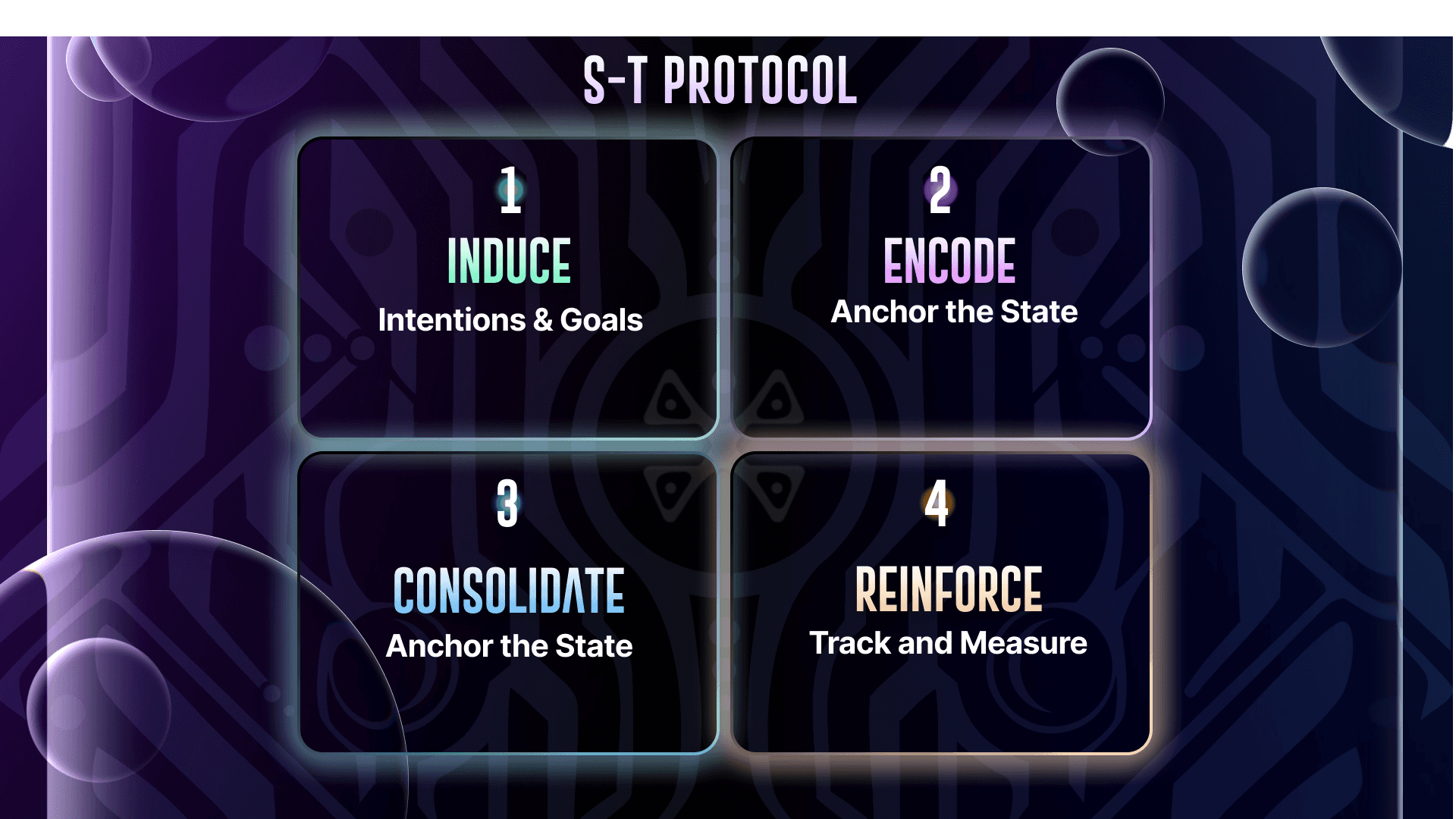
The protocol is structured around four repeating phases:
Induction
Experiences or practices that reliably evoke specific states, such as decentering, attentional clarity, or self-transcendence.
Encoding
Guided reflection and sensemaking that stabilize memory, meaning, and attentional salience of the experience.
Consolidation
Repetition under structured conditions, testing whether aspects of the state reappear with less effort and greater stability.
Reinforcement
Longitudinal tracking to observe persistence, decay, or transformation into trait-level change.
States to Traits does not promise transformation. It creates conditions to test it.
· · ─ ·✶· ─ · ·
THE SWIM MODEL
Mapping change without mythology
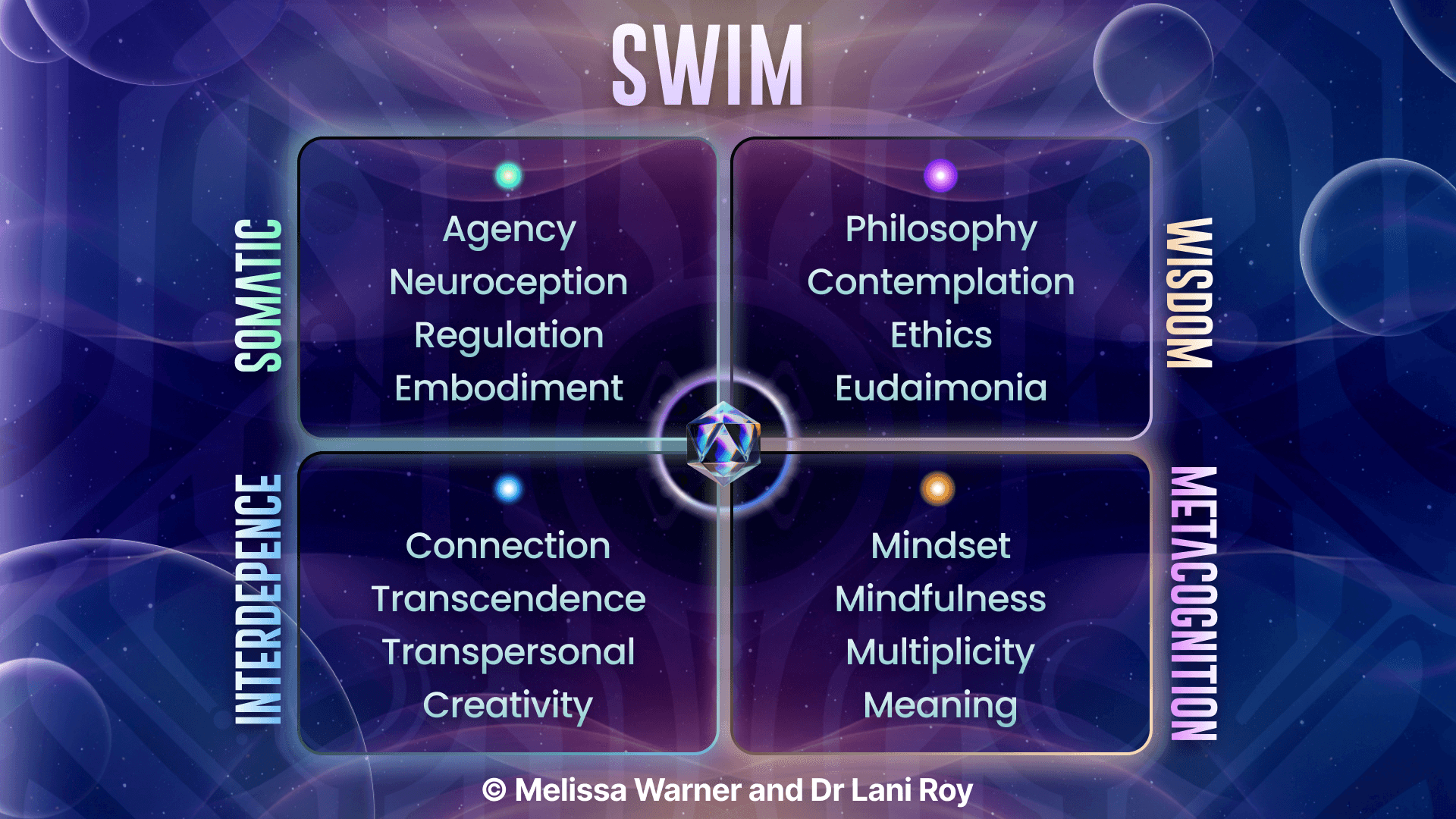
The SWIM model co-designed by Melissa Warner and Lani Roy, is a phenomenological framework for tracking how experience changes over time.
It does not define stages of awakening or prescribe outcomes.
It provides a shared language for observation.
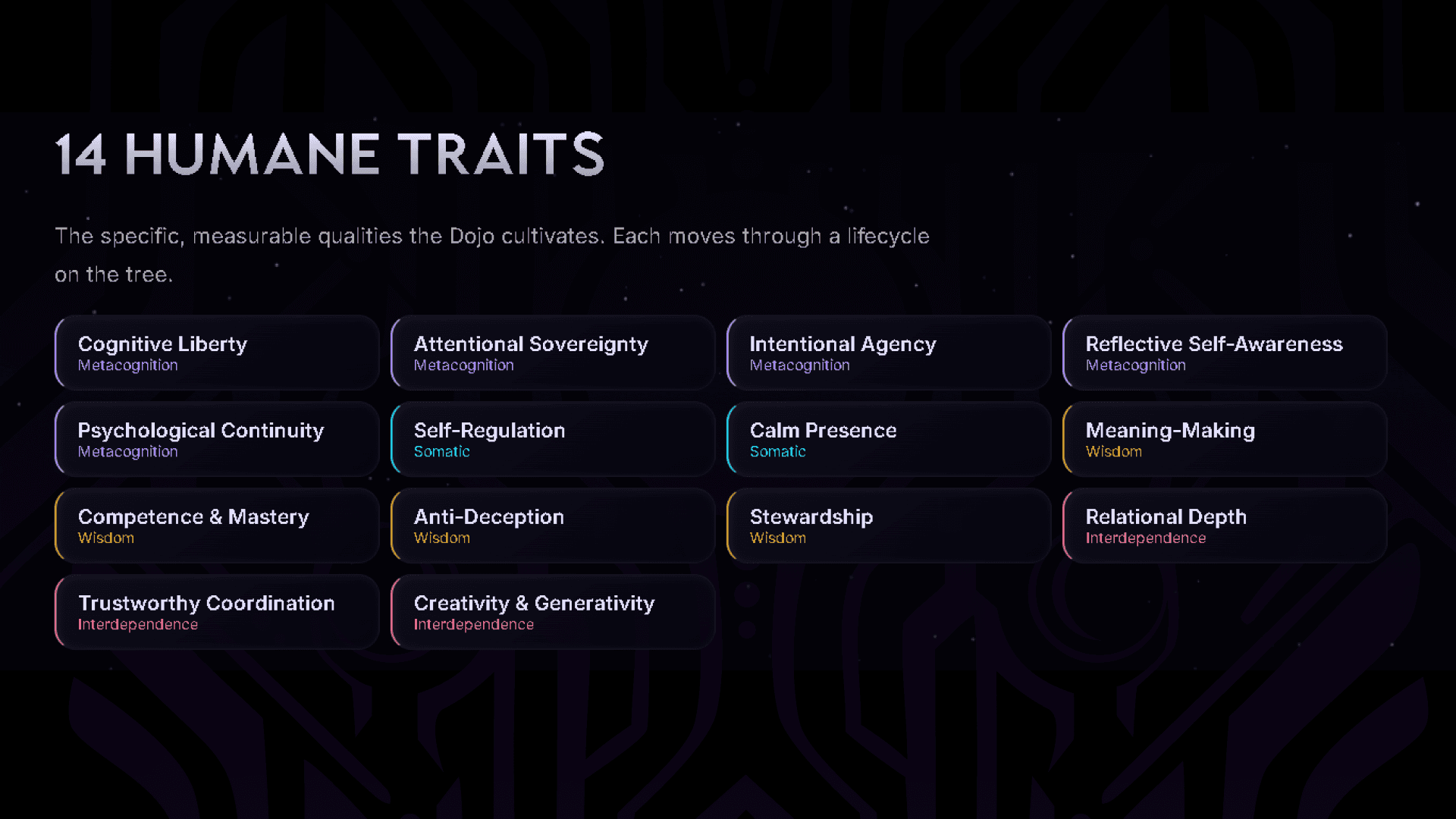
SWIM organizes first-person experience across four domains:
Somatic
Changes in bodily awareness, regulation, energy, and felt sense of agency.
Wisdom
Shifts in values, ethical salience, perspective-taking, and relationship to uncertainty.
Interdependence
Shifts in relational perception, boundary experience, and sense of connectedness with others and the environment.
Metacognition
Changes in awareness of thought patterns, meaning-making, self-model flexibility, and attentional control.
Used together with States to Traits, SWIM functions as a lens for noticing what areas are actually changing, and what other states you need to train to develop traits in other areas in need of attention.
· · ─ ·✶· ─ · ·
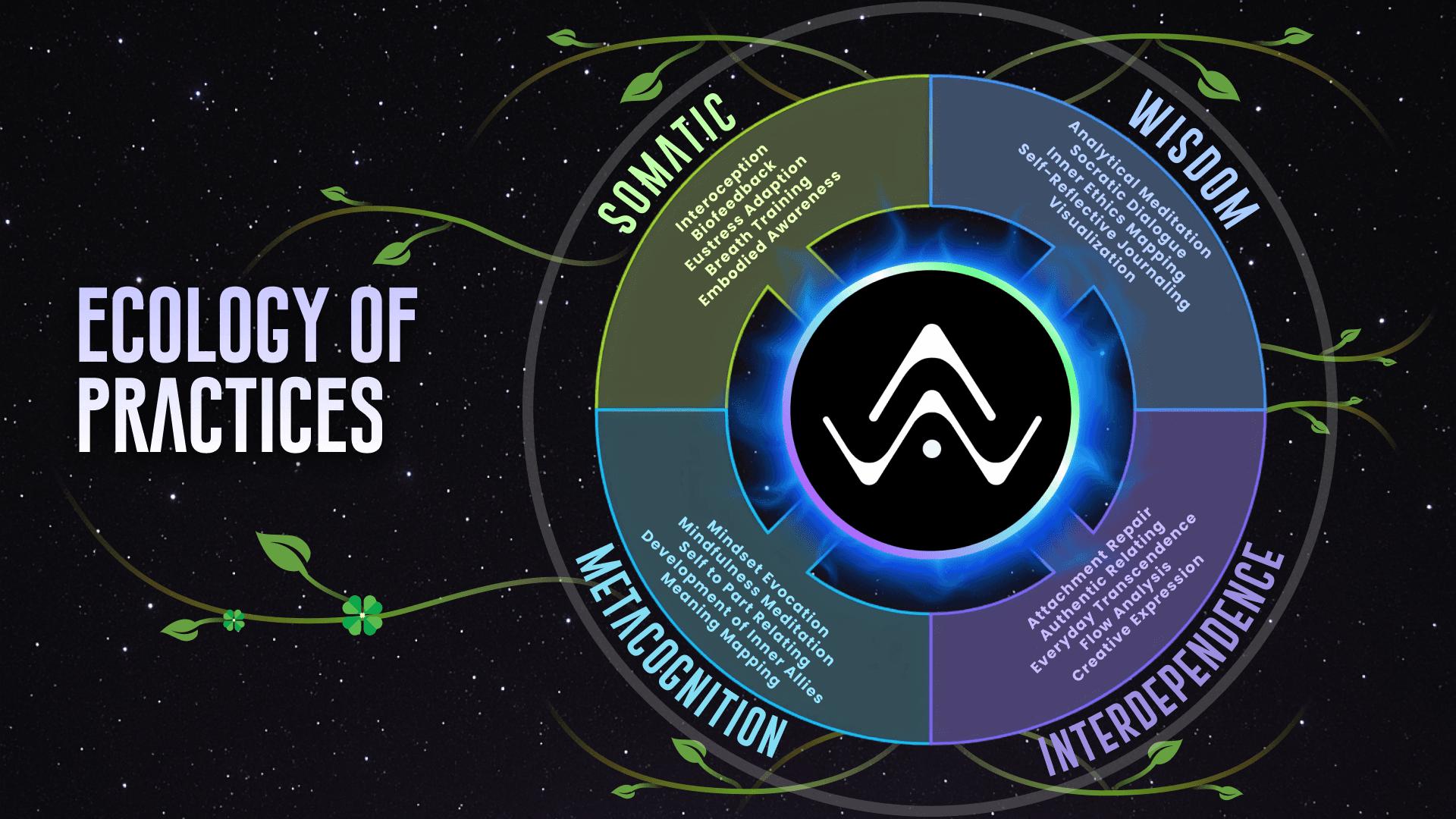
THE ECOLOGY OF PRACTICES
Why no single method is enough
No single practice produces durable change on its own.
In the Cyberdelic Dojo we aim to help you develop an ecology of practices.
A carefully curated mix of methods that interact over time.
These may include immersive environments, contemplative practices, somatic training, reflective writing, dialogue, and everyday behavioral experiments.
The emphasis is not intensity, but continuity.
Not peak experience, but cumulative effect that you can track.
Practices are treated as variables within a system, not sacred techniques.
· · ─ ·✶· ─ · ·
WHAT IS COMING
The Cyberdelic Dojo platform
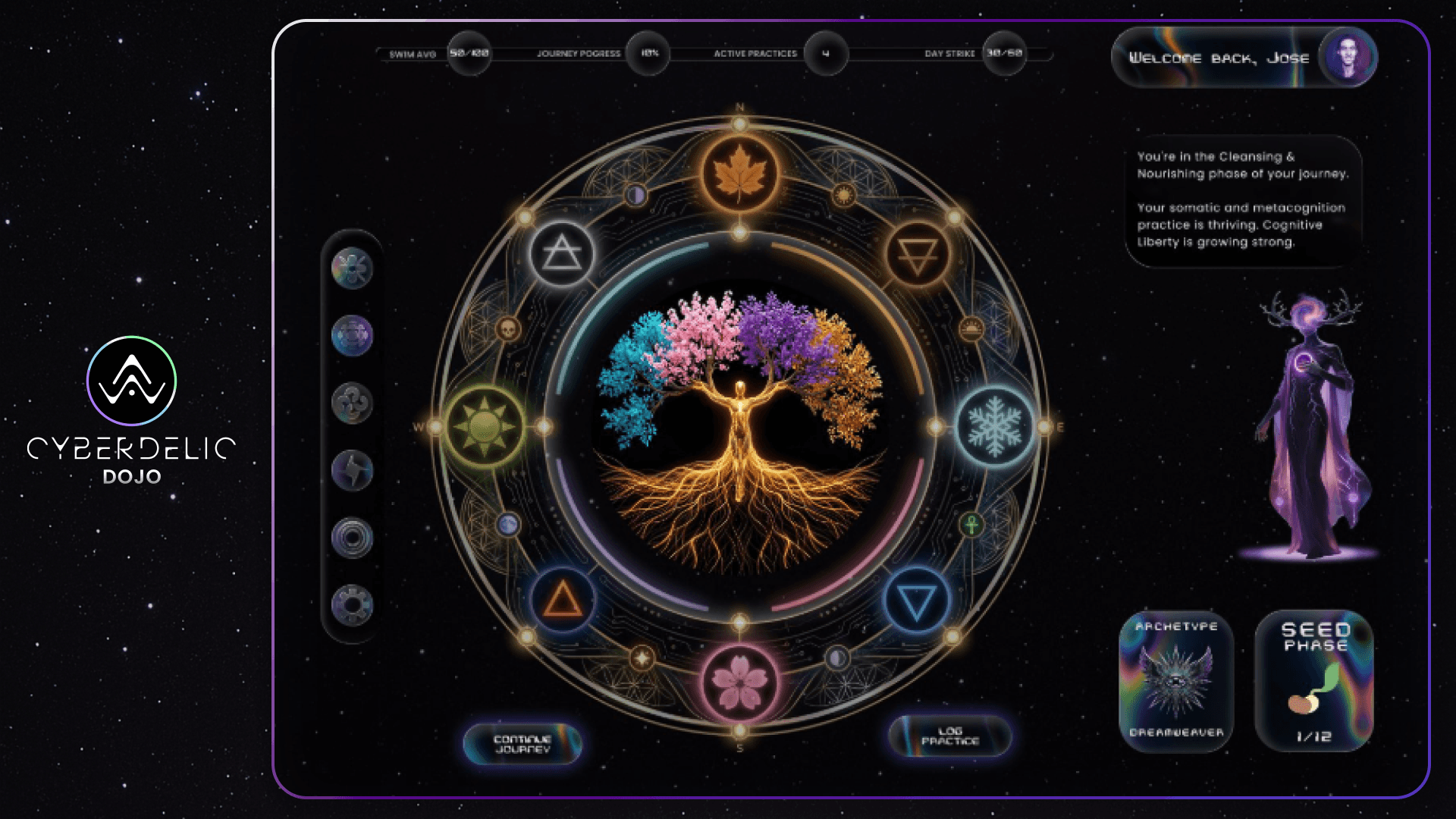
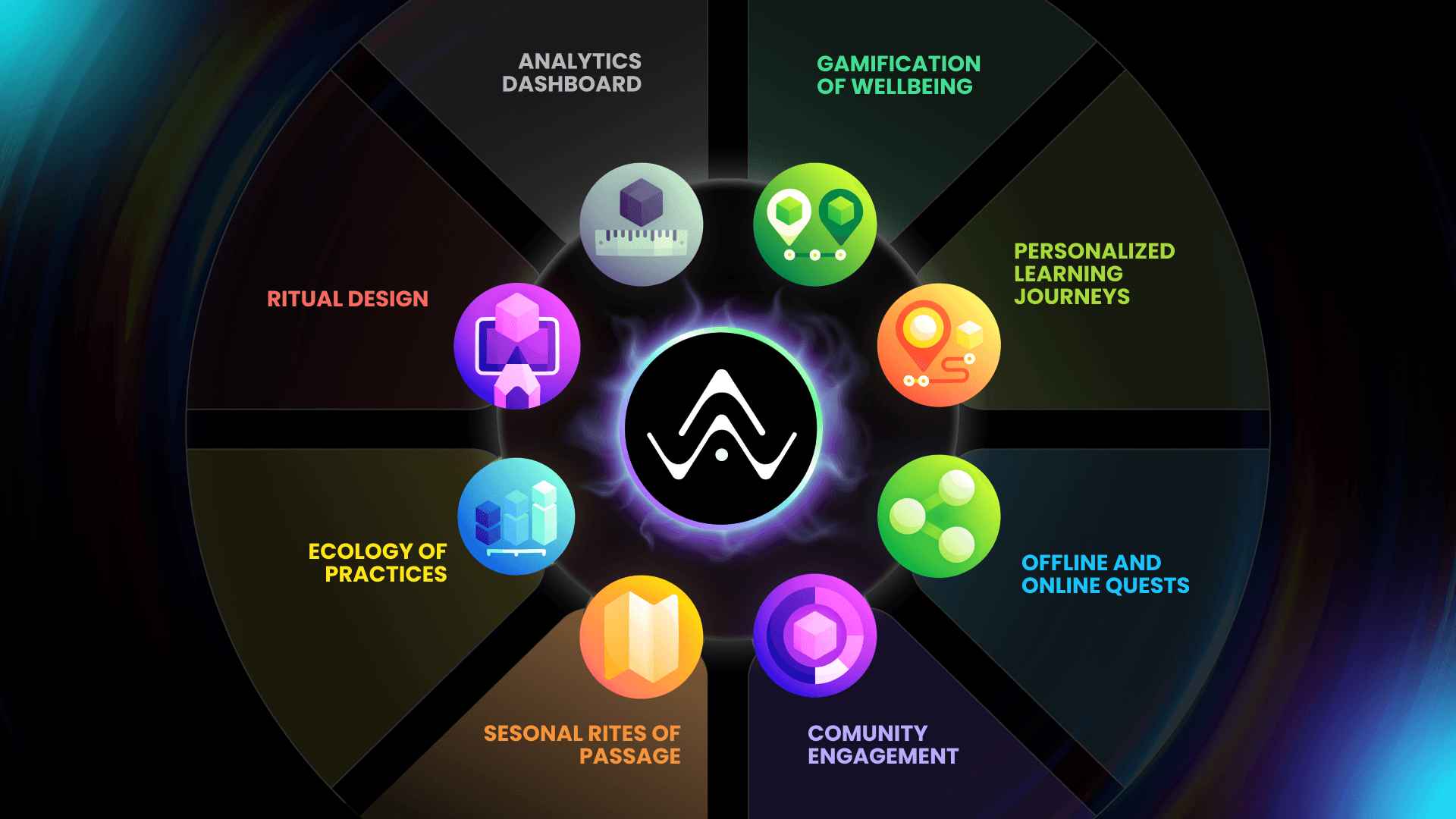
We are currently developing the Cyberdelic Dojo as a structured environment where these protocols can be practiced, studied, and refined over time.
Upcoming developments include:
A guided interface for running States to Traits cycles
Integrated tracking across the SWIM dimensions
Tools for reflection, pattern recognition, and longitudinal insight
Carefully designed immersive and contemplative modules
A shared language for facilitators, researchers, and practitioners
The Dojo is a place to practice how states and insights becomes lasting traits.
· · ─ ·✶· ─ · ·
EARLY ACCESS
Our first Alpha testing group will open 01/ 06/2026
· · ─ ·✶· ─ · ·
Back to Initiation Toolkit