Theme
AI
0 experiences and 6 knowledge items.
6 knowledge items
Reading, watching and tools on AI
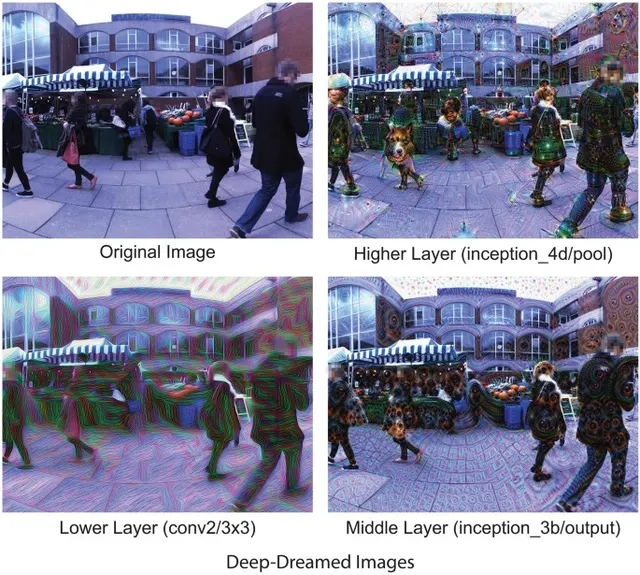
A Deep-Dream Virtual Reality Platform for Studying Altered Perceptual Phenomenology - Scientific Reports
A novel tool called the Hallucination Machine combines deep convolutional neural networks and panoramic VR to simulate visual hallucinatory experiences, mimicking the phenomenology of psychedelics without altering neurophysiology. Experiments show it induces similar visual effects but does not produce the temporal distortions typically associated with altered states.

AI and the Edge of the Unknown
AI is evolving rapidly, challenging human concepts of creativity, intuition, and self-awareness. We are nearing a technological singularity where AI's growth outpaces human understanding, leading to unpredictable futures. Key questions arise about AI's potential discoveries and how to align future developments with human values amidst this transformation.

AI Keeps Getting Better at Talking About Consciousness
Current scientific asymmetry exists between the rapid advancement of artificial intelligence and the limited understanding of consciousness. While AI models like Claude 3.0 exhibit traits associated with consciousness, they express uncertainty about their own sentience and inner experiences, highlighting the ongoing philosophical and scientific questions surrounding the nature of consciousness.

Blockade Labs (Skybox Ai)
Blockade Labs offers Skybox AI, a tool for generating 360° environments and skyboxes using AI technology. The tool is part of a broader focus on AI and VR in 2023.

Hyperhumanism: Reclaiming Our Humanity in the Age of AI
Exploration of hyperhumanism emphasizes reclaiming humanity amidst advancements in AI, touching on themes of art, culture, philosophy, and spirituality, as discussed in a podcast featuring Carl Hayden Smith.
The New Skill in AI is Not Prompting, It's Context Engineering
Context Engineering is emerging as a crucial skill in AI, shifting the focus from prompt engineering to providing comprehensive context for tasks. The success of AI agents increasingly depends on the quality of context provided, with many failures attributed to context rather than model issues.