
Beginner
Cyberdelic Foundation Pt2
Tirso Perez & Guests
A 4-hour foundational course that explores cyberdelics - the use of VR, AR, and biofeedback technologies to facilitate altered states of consciousness, personal transformation, and spiritual exploration without substances.
$33
You pay on Stripe's own page, signed in to your account; the course opens a moment later. Reality Hackers pay 10% less and Reality Weavers 20% less: the price is worked out when you pay.
Already have it? Open your course
Course overview
Everything inside this journey
A clear look at what you’ll learn and what’s included.
About this course
We stand at a unique moment in human history. For millennia, humans have sought to expand consciousness through meditation, ritual, breathwork, and sacred plant medicines. Today, technology offers unprecedented new pathways to these ancient destinations. But the question isn't whether technology will shape human consciousness—it already does, profoundly and continuously. The crucial question is whether we'll guide this evolution with wisdom, intention, and ethical care, or allow it to unfold haphazardly.
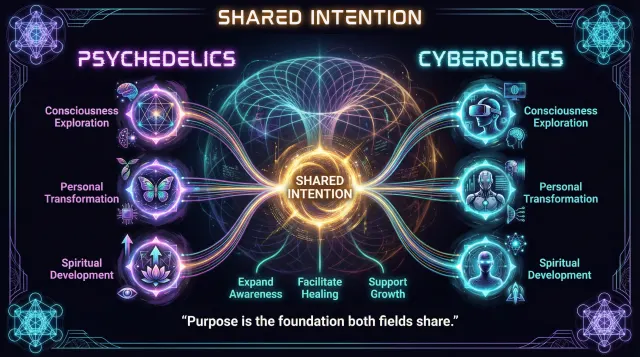
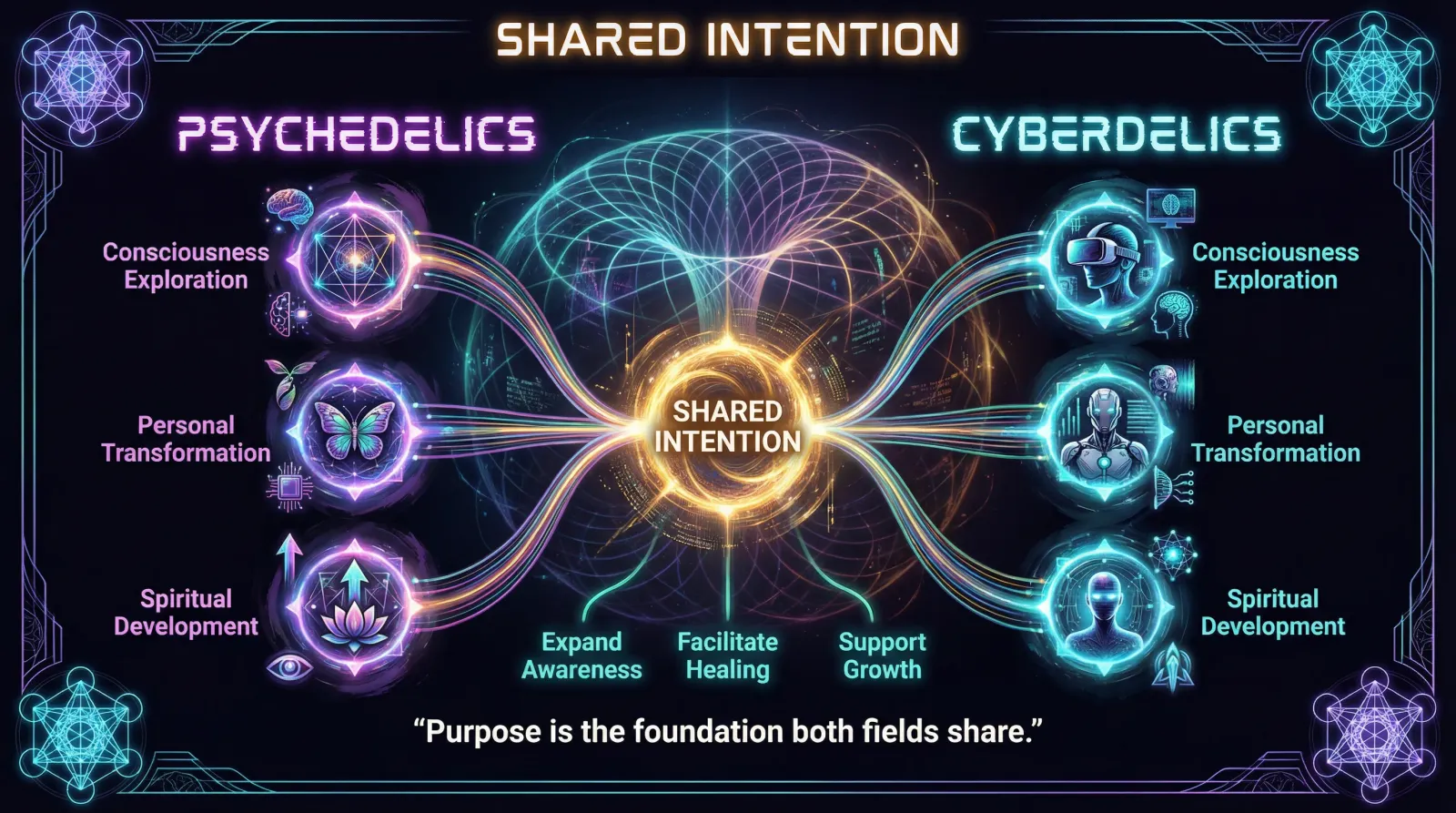
Cyberdelic 101 is your comprehensive introduction to this emerging field where consciousness exploration meets technological innovation. This 4-hour foundational course explores cyberdelics—the intentional use of virtual reality, augmented reality, biofeedback systems, and interactive media to facilitate altered states of consciousness, personal transformation, and spiritual exploration without the use of psychoactive substances. More than just education about VR applications, this course represents an invitation to participate in shaping how humanity evolves alongside increasingly powerful technologies.
Whether you're a meditation teacher wondering if technology could enhance your students' practice, a therapist exploring innovative treatment modalities, a technologist seeking meaningful applications beyond entertainment and productivity, or simply someone curious about the frontiers of human potential, this course provides the essential foundation you need. We assume zero prior experience with either VR technology or consciousness facilitation, making this accessible to complete beginners while offering depth that engages experienced practitioners.
4 modules · 46 lessons
Course curriculum
 Module 1Defining Cyberdelics2 lessons · 3 interactive
- 8.1The Cyberdelic Design Dimension ExplorerInteractive
- 8.2Cyberdelic Design DimensionsInteractive
- 9Navigating the Spectrum from Meditation to Cyberdelics
- 9.1The Advisor's ChallengeInteractive
- 10Process vs. Outcome: The Role of User Intention
 Module 3Scientific Understanding5 lessons · 2 interactive
- 30Neural Validation and the DeepDream Findings
- 31The Spectrum of Therapeutic Evidence
- 31.1Therapeutic Evidence and ValidationInteractive
- 32The Protocol of Transformation: From States to Traits
- 33The SWIM Model: A Phenomenological Framework for Change
- 33.1Applying the FrameworksInteractive
- 34Transition: Bridging Science and the Ecosystem
 Module 4Current Applications19 lessons · 9 interactive
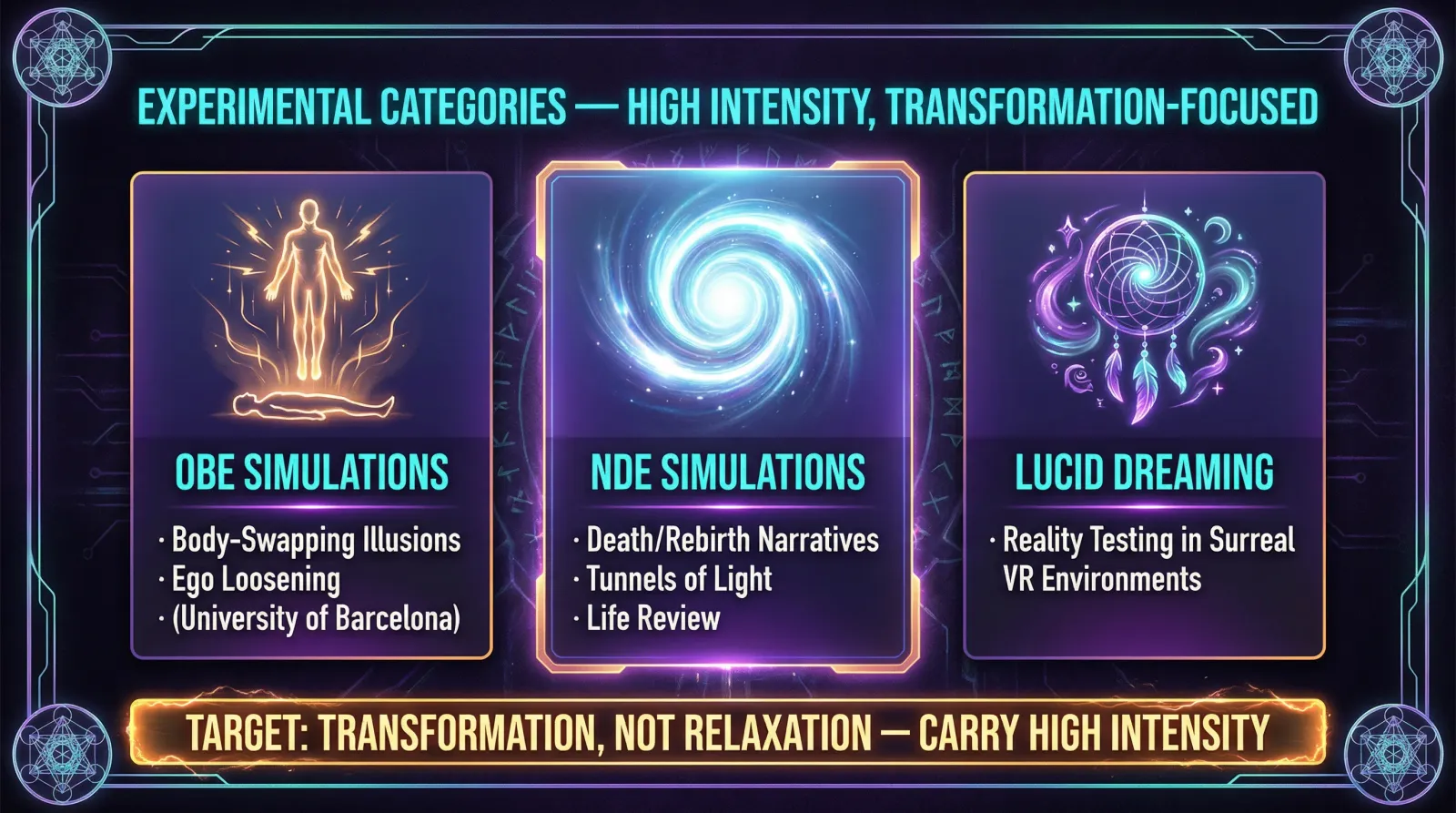
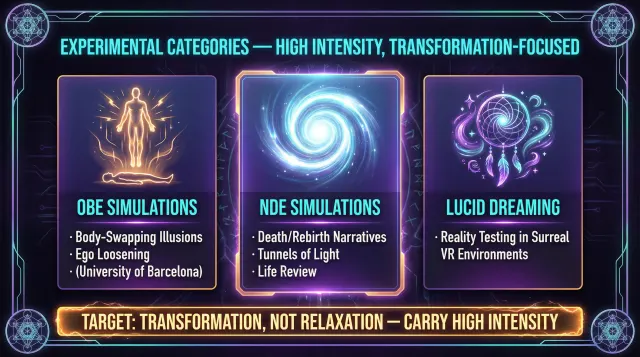
- 35Categorizing the Cyberdelic Landscape
- 36Engagement vs. Fascination: Differing Design Philosophies
- 37Emerging Platforms and Therapeutic Models
- 37.1Scenario: Three Clients, Three PlatformsInteractive
- 37.2Categorizing the CyberdelicInteractive
- 38Virtual Reality Exposure Therapy (VRET) as a Clinical Standard
- 39SnowWorld and the Mechanisms of Pain Distraction
- 40The Mechanisms of Biofeedback Integration
- 41Exploring Modalities of Biofeedback
- 41.1The Cybernetic LoopInteractive
- 41.2Exposure Therapy and BiofeedbackInteractive
- 42The Psychology of Shared Virtual Spaces
- 43Platforms for Shared Cyberdelic Experiences
- 44Navigating the Creator and Distribution Ecosystem
- 45Evaluating Quality Within Creator Ecosystems
- 45.1Scenario: Three People, Three NeedsInteractive
- 45.2Shared Spaces and Creator EcosystemsInteractive
- 46Breathwork in VR
- 46.01Therapeutic Sound in VR
- 47Movement, Flow States, and Nature Psychology
- 48The Experimental Frontier and Ethical Pathways
- 49Navigating Hardware Choices and Trade-offs
- 49.1Concept Check: Recommendation LogicInteractive
- 50The Four-Step Platform Selection Framework - Pt 1
- 51The Four-Step Platform Selection Framework - Pt 2
- 51.1Scenario: Three Complex CasesInteractive
- 52Transition: Preparing for the Cyberdelic Ecosystem
- 52.1Platform Selection and RecommendationsInteractive
 Module 5The Cyberdelic Ecosystem20 lessons · 10 interactive
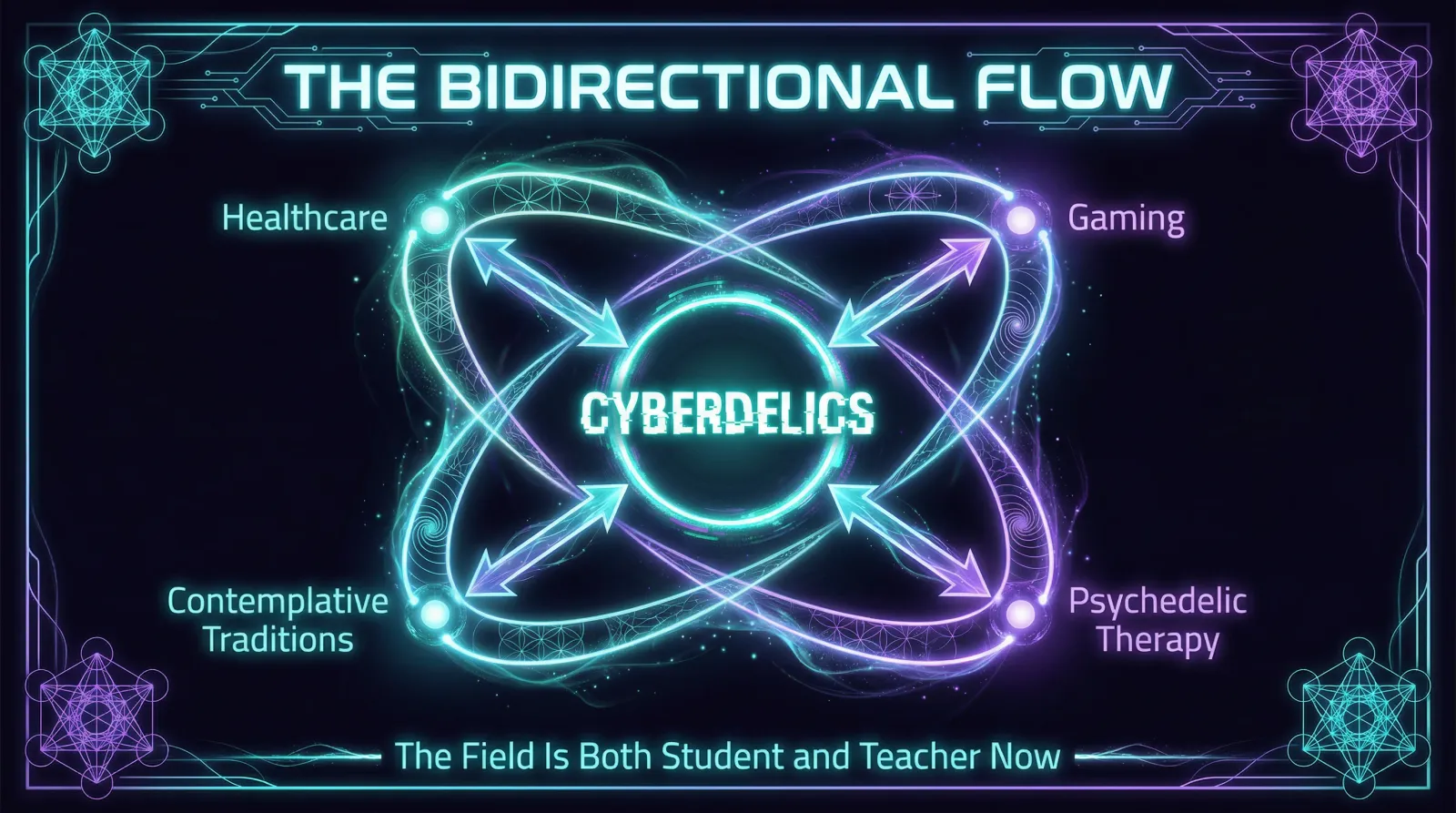
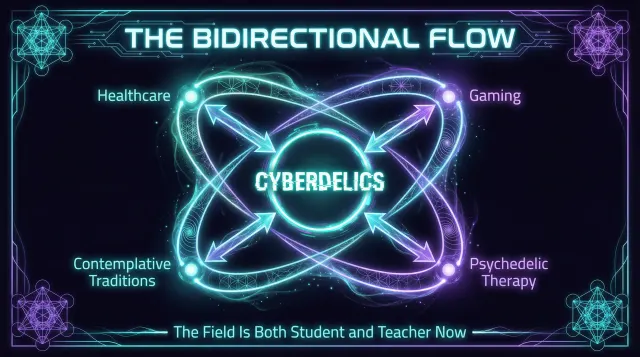
- 53The Necessity of Ecosystem Thinking
- 53.1The Cyberdelic Ecosystem: Living MapInteractive
- 54The Role of Hardware Manufacturers
- 55The Builder Landscape and Software Ecosystem
- 55.1The Builder's DilemmaInteractive
- 56Open Source Collaboration and Cross-Pollination
- 56.1Systems Thinking CheckInteractive
- 57The Role of Research Institutions in Field Validation
- 58Translating Research to Clinical Practice
- 59The Emerging Role of the Professional Facilitator
- 59.1The Scope of Practice TestInteractive
- 60Communities and the Peer-to-Peer Infrastructure
- 60.1Research Validation CheckInteractive
- 61Investment Streams and Business Model Sustainability
- 62The US Regulatory Landscape
- 63Global Regulation and Data Privacy
- 64How the Field Knows What It Knows
- 65Staying Current and Practicing Ethically
- 65.1Investment and Business Model CheckInteractive
- 66Overcoming Technological Limitations and Social Skepticism
- 67Building a Sustainable Ecology of Practices
- 67.1Designing a Sustainable PracticeInteractive
- 68Where the Field Is Growing
- 69The Inflection Point
- 69.1Technological and Social Challenges CheckInteractive
- 70The Six Pathways for Active Ecosystem Participation - Pt 1
- 71The Six Pathways for Active Ecosystem Participation - Pt 2
- 71.1The Capstone Synthesis TestInteractive
- 71.2Pathway Reasoning CheckInteractive
- 71.3Congratulations you finished
What you'll get
What's included
- Five Guided Modules
- A Shared Vocabulary
- Real-World Examples
- Ecosystem Map
- Reflection Prompts
- Completion Badge
Before you start
Requirements
What you'll walk away with
By the end
Knowledge you'll gain6 points
- Clear, precise definition of cyberdelics and ability to distinguish from related fields
- Understanding of historical development from vision to validated practice
- Scientific literacy in consciousness research, VR psychology, and altered states
- Familiarity with current platforms, their capabilities, and appropriate applications
- Awareness of ecosystem stakeholders, opportunities, and challenges
- Critical thinking tools for evaluating claims and assessing quality
Perspectives that may shift6 points
- Technology as potential tool for consciousness rather than inherent distraction
- VR as legitimate transformation pathway, not just gaming or entertainment
- Science and spirituality as complementary rather than contradictory
- Personal agency in shaping how technology affects human consciousness
- Hope about humanity’s relationship with increasingly powerful technologies
- Curiosity about your own consciousness and its potential development
Skills you'll develop6 points
- Ability to explain cyberdelics clearly to various audiences
- Framework for evaluating platforms and experiences critically
- Understanding of safety considerations and ethical questions
- Capacity to engage meaningfully in cyberdelic communities
- Foundation for either personal practice or professional facilitation
- Vision for how you might contribute to field development
Before you decide
Frequently asked
Who is this course for?
- Consciousness Workers: Meditation teachers, yoga instructors, breathwork facilitators, spiritual directors, life coaches, and wellness practitioners curious about integrating technology into their offerings.
- Healthcare Professionals: Therapists, counselors, psychologists, psychiatrists, pain specialists, and addiction counselors exploring innovative treatment modalities.
- Technology Professionals: Software developers, UX designers, product managers, and entrepreneurs in VR/AR seeking meaningful applications beyond entertainment and productivity.
- Researchers and Students: Academic researchers in psychology, neuroscience, human-computer interaction, or consciousness studies seeking comprehensive overview of the field.
- Personal Growth Seekers: Individuals curious about their own consciousness exploration using technology.
- Skeptics and Critical Thinkers: Those who suspect "cyberdelic" might be New Age pseudoscience or Silicon Valley hype.
How long do I have access to the course?
You will have lifetime access to this course as a member. This is a complementary course to all of our members upon signing up. Its a pre-requisite to take this course before many of the other courses in the academy
Is there a certificate upon completion?
You will earn a Cyberdelics 101 badge upon completion
What if I'm not satisfied with the course?
Since this course is free we are always looking for feedback on how we could improve the experience this course brings.
How long does it take to complete the course?
The duration varies based on your learning pace. On average, completing the course may take several weeks to a few months.
How much time should I dedicate per week?
5-10 hours
Your next step
Begin Cyberdelic Foundation Pt2
4 modules and 46 lessons, yours to keep. $33.
Keep going
More courses
 OpenIncluded in every membershipBeginner
Cyberdelic Foundations
Tirso Perez
A foundational course exploring how the cyberdelic paradigm uses technology to facilitate altered states of consciousness, personal transformation, and spiritual exploration without substances.
3 modules · 27 lessons
 Coming soon$333Intermediate
Cyberdelic Experience Design
Jose Montemayor Alba
This course guides you in crafting experiences that shift perception, train metacognition, and support the journey from altered states to altered traits through ethical, humane design.
 Coming soonPrice to be announcedIntermediate
Context Engineering
Prof. Carl H. Smith
Learn to read, and deliberately rewrite, the conditions that shape your thinking: the room, the light, the people present, the time of day. A practice from Professor Carl H. Smith's Contextology.