
Knowledge · Research paper
Active VR Games Reduce Pain Sensitivity in Young, Healthy Adult
By Eric Evans, Keith E. Naugle, Alex Ovispo, Anthony S. Kaleth, Brent Arnold, Kelly M. Naugle
Research indicates that engaging in active virtual reality (VR) games can significantly reduce pain sensitivity in young, healthy adults. This effect is primarily attributed to distraction, as participants focus on the VR environment rather than the pain stimulus. Previous studies have shown that both passive and active VR engagement can lead to lower pain levels, but most prior research has concentrated on passive experiences with limited exposure time.
- Kind
- Research paper35 research papers in the bank
- Published
- 2021Where it sits among everything in the Knowledge Bank, by year
- Authors
Topics
Abstract
About the paper
Research on virtual reality (VR) as a method of pain reduction has significantly grown in the past 2 decades. This research suggests that passively engaging in VR reduces acute pain sensitivity in healthy and clinical adult populations (Magora et al., 2006; Law et al., 2011; Jin et al., 2016; Glennon et al., 2018). It is suggested that a common mechanism that reduces pain perception in adults during VR primarily relies on distraction, where participants’ attention is directed towards the VR environment instead of the pain stimulus (Hayashi et al., 2019). Additionally, distraction could be attributed to the inability of sensory systems to focus on multiple simultaneously active pain stimuli, thereby reducing pain (McCaul and Malott, 1984; Hoffman et al., 2007). For example, in a study examining the effects of VR on ischemic pain, participants reported lower pain levels and spent less time thinking about the induced pain while engaging in a VR environment compared to not undergoing a VR stimulus (Hoffman et al., 2003). Similarly, earlier work in VR and pain has shown positive distraction effects of engaging in VR environments for adults and adolescents who experienced burn pain (Hoffman et al., 2000a; Hoffman et al., 2000b). However, these prior studies on VR’s effects on pain have primarily focused on passive engagement (little to no physical activity) or involved short exposure time to VR technology.
Related
More like this

VR for Enhancement of Emotional Mindset in the First Lockdown of United Kingdom for the Covid-19 Pandemics
During the UK lockdown from March to May 2020, data from the Office for National Statistics revealed significant changes in people's behavior. The use of the Virtual Reality app TRIPP for meditation was found to effectively enhance psychological and emotional mindsets during this challenging period.
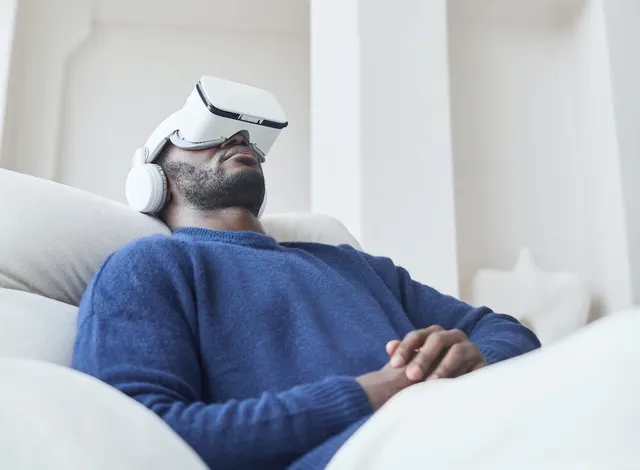
A Virtual Reality Application for Stress Reduction: Design and First Implementation of ERMES Project
The ERMES project utilizes Virtual Reality to enhance psychological well-being by offering immersive experiences aimed at stress reduction. It includes Mindfulness sessions, virtual museum exploration, and Art Therapy activities, allowing patients to engage in therapeutic practices individually or collaboratively in hospital settings.
The Light and Dark Sides of VR
Virtual Reality (VR) has diverse applications in entertainment, education, therapy, and research, enhancing communication and wellbeing. However, it also poses risks from overuse and unethical design, potentially leading to negative effects, especially in vulnerable users. Identifying these risks and establishing safety guidelines is crucial as VR becomes more integrated into daily life.
- Editor
- Not recorded yet
- Last reviewed
- Not reviewed yet
Conversation
Share your experience of it
What it was like, what helped, what you would tell someone before they try it.