Knowledge · Research paper
VR-based relaxation for enhancement of perioperative well-being, mood and quality of life - Scientific Reports
By Matthias C. Schrempf, Julian Petzold, Morten Aa. Petersen, Tim Tobias Arndt
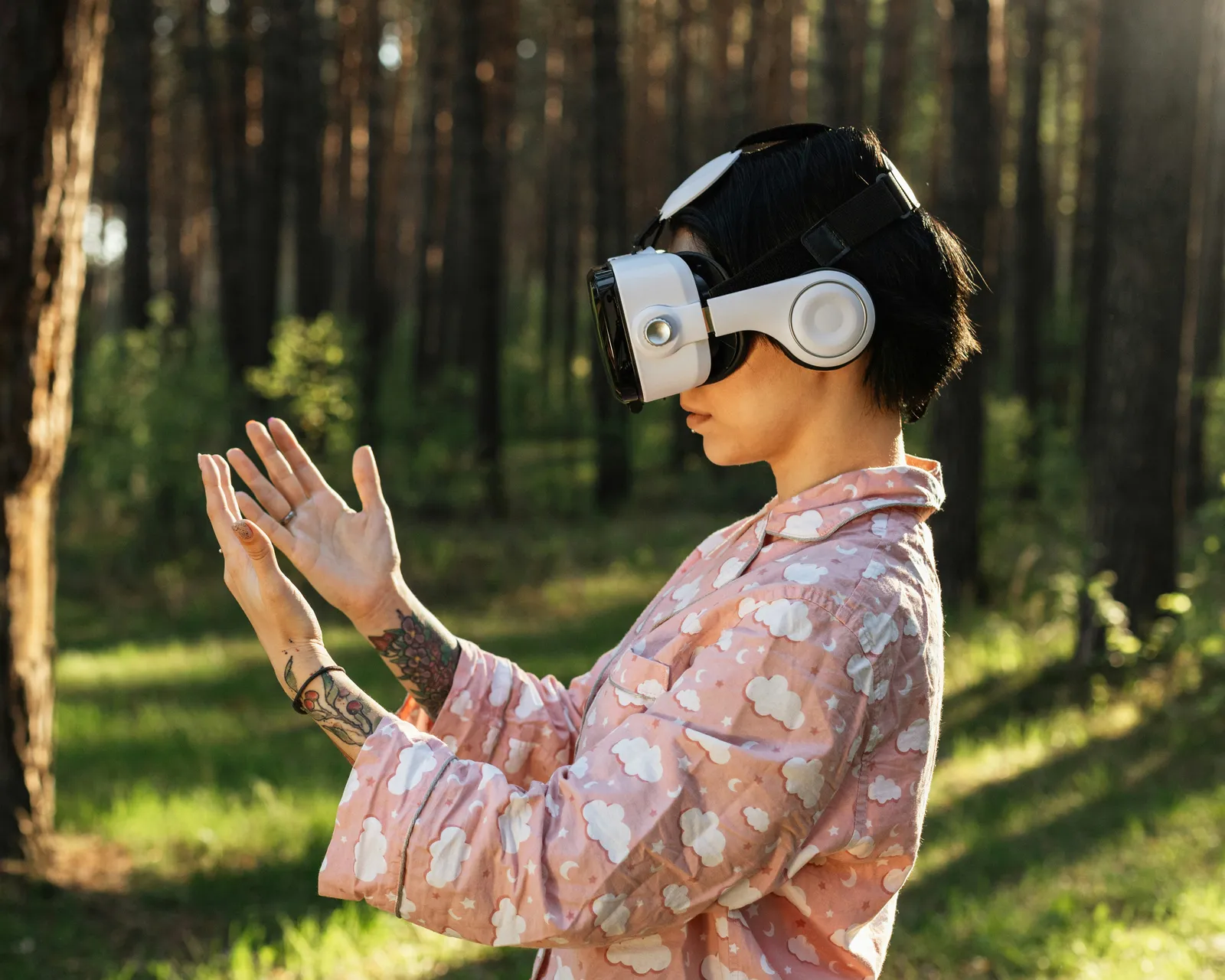
Virtual Reality (VR) is emerging as a cost-effective digital therapeutic tool for stress reduction, improving symptoms of anxiety and depression, and enhancing psychological well-being, particularly in cancer patients. VR interventions create immersive environments that distract users from their immediate surroundings, potentially reducing perioperative stress and improving quality of life and patient satisfaction during surgery.
- Kind
- Research paper35 research papers in the bank
- Published
- 2022Where it sits among everything in the Knowledge Bank, by year
- Authors
Topics
Abstract
About the paper
Technological progress and advances in the development of digital therapeutics, which are interventions based on advanced technology and software programmes, have broadened the range of potential tools for stress reduction24,25.
Virtual Reality (VR), which is increasingly being explored as a cost-effective digital therapeutic, is a technology that simulates a real environment. In a virtual environment, visual, auditory, and haptic stimuli are used to create immersion, an interactive experience, and a sense of presence in that environment26,27,28,29.
Both realistic graphics and acoustics as well emotional responses evoked by the VR experience, contribute to the sense of presence described as a feeling of being in the virtual scene30,31. VR-based interventions can improve symptoms of anxiety and depression and have been successfully used to treat acute and periinterventional pain in adults and children27,32,33,34. It has also been applied to improve psychological well-being in young cancer patients35. Virtual immersive environments create a strong distraction as users cannot see immediate surroundings through the VR headset. Software that enables users to interact with the VR environment e.g., by steering or controlling elements of the virtual environment by head movements, can increase the degree of immersion and disctraction28,34,36.
There is growing evidence that VR interventions can contribute to emotional, psychological, and social well-being30. Mindfulness-based interventions have shown to elicit positive emotional responses and improve mood37,38,39.
The state of immersion that occurs in a VR environment is associated with focused attention which is intended during mindfulness practice and might enhance the effect37. These findings suggest that VR interventions may hold the potential to reduce perioperative stress and improve various aspects of quality of life, mood and patient satisfaction in cancer patients undergoing surgery.
Related
More like this
The Reality of VR
The fundamental question surrounding virtual reality (VR) is its level of realism, which influences its perception as either advanced computer technology or a distinct media experience. This understanding is essential for utilizing VR in scientific learning and therapeutic applications.
Art as therapy in VR: A scoping review
This scoping review examines the use of virtual reality in therapeutic art interventions, highlighting its potential for enhancing artistic expression, self-improvement, and motivation in psychotherapy and neurorehabilitation. While virtual reality offers unique benefits, such as controlled environments and appeal to digital natives, challenges like digital literacy, technical limitations, and inclusivity must be addressed by practitioners and developers for effective implementation.

Effectiveness of VR therapy in the treatment of anxiety disorders in adolescents and adults
VR therapy interventions show a positive effect on reducing anxiety in patients with anxiety disorders, but further high-quality studies are needed to confirm these findings due to limitations in the existing literature.
- Editor
- Not recorded yet
- Last reviewed
- Not reviewed yet
Conversation
Share your experience of it
What it was like, what helped, what you would tell someone before they try it.