Knowledge · Research paper
Autonomic indicators of self-transcendence: insights from the numadelic VR paradigm
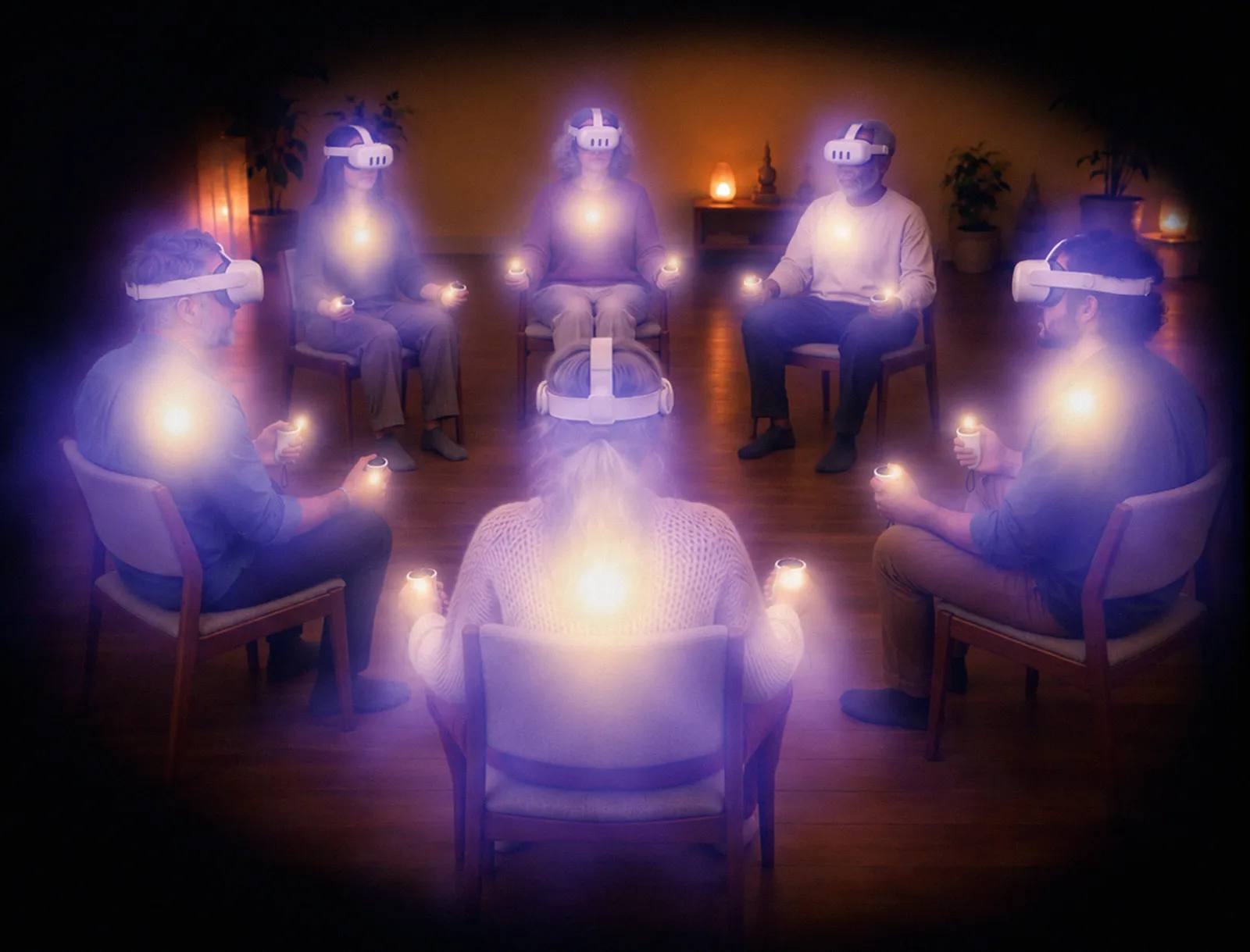
HRV amplitude is identified as a physiological marker of self‑transcendent experiences during a “numadelic” VR paradigm, showing links to subjective self‑transcendence, compassion traits, and emotional improvement, though the study does not establish general clinical efficacy or long‑term effects.
- Kind
- Research paperFeatured35 research papers in the bank
- Published
- 2026Where it sits among everything in the Knowledge Bank, by year
- Author
- Unknown
Topics
Abstract
About the paper
This 2026 peer-reviewed study evaluates HRV amplitude as a physiological marker of self-transcendent experience during a “numadelic” VR paradigm. It reports associations with subjective self-transcendence, compassion traits and emotional improvement, without establishing general clinical efficacy or long-term effects.
Related
More like this

Flicker light stimulation enhances the emotional response to music: a comparison study to the effects of psychedelics
Flicker light stimulation (FLS) enhances emotional responses to music, similar to the effects of psychedelics. In a study with twenty participants, FLS significantly increased reported emotions, particularly "Joyful Activation," and intensity of FLS correlated with higher emotional arousal. These findings suggest further exploration of FLS as a method for inducing altered states of consciousness and its interaction with music-evoked emotions.
Emotional Beasts
Advancements in VR and physiological sensing enable immersive communication through lifelike avatars. The proposed solution involves integrating bio-signal sensors to detect users' emotional states and creating expressive avatars, termed Emotional Beasts. This approach aims to enhance self-expression and emotional connection in VR, moving beyond surface-level experiences to foster deeper human interactions.

Virtual reality: a powerful technology to provide novel insight into treatment mechanisms of addiction
Virtual reality (VR) is emerging as a significant tool in mental health research, particularly for studying addiction. It offers immersive environments that simulate real-life scenarios, allowing researchers to investigate factors like craving, psychophysiology, and cognition in addiction treatment. VR enables standardized experimental designs and personalized simulations, enhancing understanding of treatment mechanisms and potentially leading to more effective therapeutic strategies.
- Editor
- Not recorded yet
- Last reviewed
- 2026-10-31
Conversation
Share your experience of it
What it was like, what helped, what you would tell someone before they try it.