
Knowledge · Research paper
Virtual reality: a powerful technology to provide novel insight into treatment mechanisms of addiction
By M. Mazza, K. Kammler-Sücker, T. Leménager
Virtual reality (VR) is emerging as a significant tool in mental health research, particularly for studying addiction. It offers immersive environments that simulate real-life scenarios, allowing researchers to investigate factors like craving, psychophysiology, and cognition in addiction treatment. VR enables standardized experimental designs and personalized simulations, enhancing understanding of treatment mechanisms and potentially leading to more effective therapeutic strategies.
- Kind
- Research paper35 research papers in the bank
- Published
- 2021Where it sits among everything in the Knowledge Bank, by year
- Authors
Topics
Abstract
About the paper
Due to its high ecological validity, virtual reality (VR) technology has emerged as a powerful tool for mental health research. Despite the wide use of VR simulations in research on mental illnesses, the study of addictive processes through the use of VR environments is still at its dawn. In a systematic literature search, we identified 38 reports of research projects using highly immersive head-mounted displays, goggles, or CAVE technologies to provide insight into treatment mechanisms of addictive behaviors. So far, VR research has mainly addressed the roles of craving, psychophysiology, affective states, cognition, and brain activity in addiction. The computer-generated VR environments offer very realistic, dynamic, interactive, and complex real-life simulations requesting active participation. They create a high sense of immersion in users by combining stereoscopic three-dimensional visual, auditory, olfactory, and tactile perceptions, tracking systems responding to user movements, and social interactions. VR is an emerging tool to study how proximal multi-sensorial cues, contextual environmental cues, as well as their interaction (complex cues) modulate addictive behaviors. VR allows for experimental designs under highly standardized, strictly controlled, predictable, and repeatable conditions. Moreover, VR simulations can be personalized. They are currently refined for psychotherapeutic interventions. Embodiment, eye-tracking, and neurobiological factors represent novel future directions. The progress of VR applications has bred auspicious ways to advance the understanding of treatment mechanisms underlying addictions, which researchers have only recently begun to exploit. VR methods promise to yield significant achievements to the addiction field. These are necessary to develop more efficacious and efficient preventive and therapeutic strategies.
Related
More like this

Believable Virtual Reality does not need high-end VR headsets — study
A study from the University of Bath reveals that emotional connection, rather than high-quality graphics or wide field of view, is key to immersion in virtual reality environments. Researchers explored how technical and human factors interact to influence users' sense of presence in VR.
Clinical application of VR in patients with cardiovascular disease: state of the art
Cardiovascular disease remains a significant cause of morbidity and mortality, with patients experiencing various psychological symptoms, including anxiety and depression, which can impact recovery. Virtual reality (VR) technology has shown promise in improving psychological outcomes for patients with atherosclerotic cardiovascular disease (ASCVD) by providing immersive experiences that can alleviate distress and enhance recovery processes.
Group VR experiences can produce ego attenuation and connectedness comparable to psychedelics
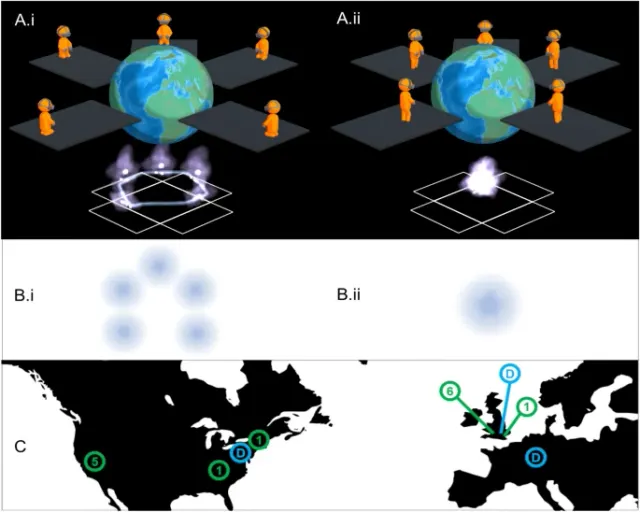
Research explores the potential of virtual reality (VR) to create self-transcendent experiences (STEs) similar to those induced by psychedelics. Using a framework called 'Isness-distributed', participants in shared VR spaces experience a blurring of self-other boundaries, leading to moments of 'energetic coalescence'. Analysis of 58 participants showed that the subjective experiences in VR were statistically comparable to those reported in psychedelic studies, indicating VR's capability to facilitate intersubjective STEs that dissolve individual ego in connection with others.
- Editor
- Not recorded yet
- Last reviewed
- Not reviewed yet
Conversation
Share your experience of it
What it was like, what helped, what you would tell someone before they try it.