Knowledge · Research paper
Group VR experiences can produce ego attenuation and connectedness comparable to psychedelics
By D. R. Glowacki, R. R. Williams, M. D. Wonnacott
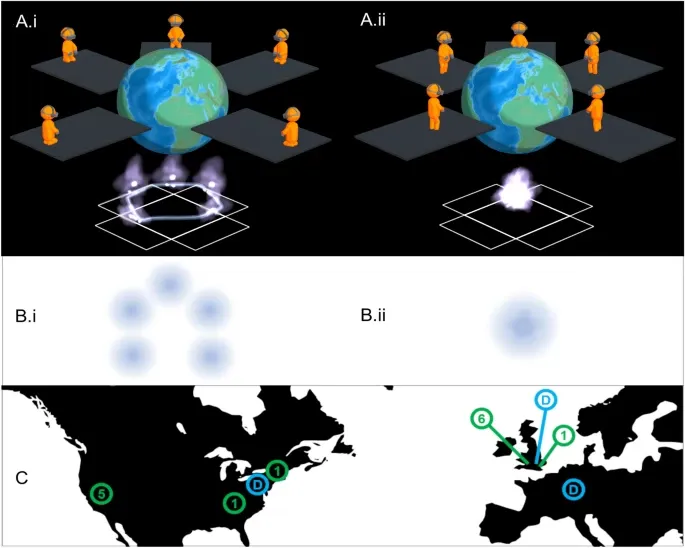
Research explores the potential of virtual reality (VR) to create self-transcendent experiences (STEs) similar to those induced by psychedelics. Using a framework called 'Isness-distributed', participants in shared VR spaces experience a blurring of self-other boundaries, leading to moments of 'energetic coalescence'. Analysis of 58 participants showed that the subjective experiences in VR were statistically comparable to those reported in psychedelic studies, indicating VR's capability to facilitate intersubjective STEs that dissolve individual ego in connection with others.
- Kind
- Research paperFeatured35 research papers in the bank
- Published
- 2022Where it sits among everything in the Knowledge Bank, by year
- Authors
Topics
Abstract
About the paper
With a growing body of research highlighting the therapeutic potential of experiential phenomenology which diminishes egoic identity and increases one’s sense of connectedness, there is significant interest in how to elicit such ‘self-transcendent experiences’ (STEs) in laboratory contexts. Psychedelic drugs (YDs) have proven particularly effective in this respect, producing subjective phenomenology which reliably elicits intense STEs. With virtual reality (VR) emerging as a powerful tool for constructing new perceptual environments, we describe a VR framework called ‘Isness-distributed’ (Isness-D) which harnesses the unique affordances of distributed multi-person VR to blur conventional self-other boundaries.
Within Isness-D, groups of participants co-habit a shared virtual space, collectively experiencing their bodies as luminous energetic essences with diffuse spatial boundaries. It enables moments of ‘energetic coalescence’, a new class of embodied intersubjective experience where bodies can fluidly merge, enabling participants to include multiple others within their self-representation. To evaluate Isness-D, we adopted a citizen science approach, coordinating an international network of Isness-D 'nodes'. We analyzed the results (N = 58) using 4 different self-report scales previously applied to analyze subjective YD phenomenology (the inclusion of community in self scale, ego-dissolution inventory, communitas scale, and the MEQ30 mystical experience questionnaire).
Despite the complexities associated with a distributed experiment like this, the Isness-D scores on all 4 scales were statistically indistinguishable from recently published YD studies, demonstrating that distributed VR can be used to design intersubjective STEs where people dissolve their sense of self in the connection to others.
Related
More like this
Could VR change how you trip on ketamine?
Ketamine, once viewed as a party drug, is gaining recognition for its therapeutic potential in treating pain, anxiety, and depression. Researchers are exploring how virtual reality technology could enhance the experience and effectiveness of ketamine therapy.
Virtual reality: a powerful technology to provide novel insight into treatment mechanisms of addiction
Virtual reality (VR) is emerging as a significant tool in mental health research, particularly for studying addiction. It offers immersive environments that simulate real-life scenarios, allowing researchers to investigate factors like craving, psychophysiology, and cognition in addiction treatment. VR enables standardized experimental designs and personalized simulations, enhancing understanding of treatment mechanisms and potentially leading to more effective therapeutic strategies.
Clinical application of VR in patients with cardiovascular disease: state of the art
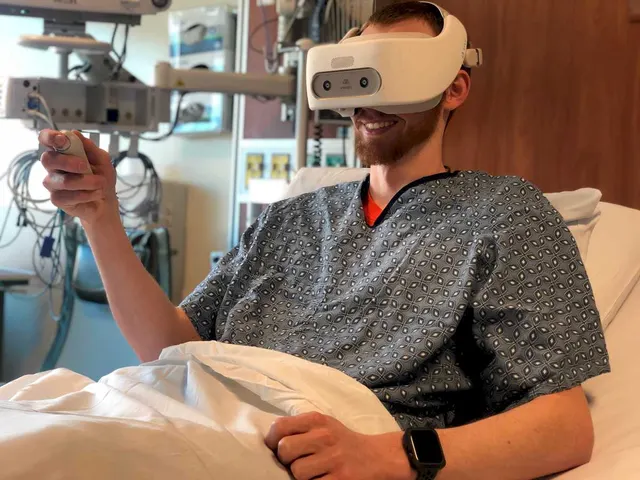
Cardiovascular disease remains a significant cause of morbidity and mortality, with patients experiencing various psychological symptoms, including anxiety and depression, which can impact recovery. Virtual reality (VR) technology has shown promise in improving psychological outcomes for patients with atherosclerotic cardiovascular disease (ASCVD) by providing immersive experiences that can alleviate distress and enhance recovery processes.
- Editor
- Not recorded yet
- Last reviewed
- Not reviewed yet
Conversation
Share your experience of it
What it was like, what helped, what you would tell someone before they try it.