
Knowledge · Research paper
Cyberdelics: Virtual reality hallucinations modulate cognitive-affective processes
By Giulia Brizzi, Chiara Pupillo, Clara Rastelli, Antonino Greco, Luca Bernardelli, Anna Flavia Di Natale, Silvia Francesca Maria Pizzoli, Elena Sajno, Fabio Frisone, Daniele Di Lernia, Giuseppe Riva
This open-access research article tests hallucinated visual virtual experiences (HVVEs) created with Google DeepDream in immersive VR. In 50 healthy participants, the study measured cognitive flexibility, inhibitory control, affective response, flow, anxiety, and autonomic activity after a control VR experience and its hallucinated counterpart. HVVEs improved cognitive flexibility and inhibitory control while producing a mixed affective and autonomic profile, including reduced positive affect and state anxiety, lower heart rate and sympathetic activity, and increased flow absorption.
- Kind
- Research paper39 research papers in the bank
- Published
- 2025Where it sits among everything in the Knowledge Bank, by year
- Authors
Topics
Abstract
About the paper
This open-access research article tests hallucinated visual virtual experiences (HVVEs) created with Google DeepDream in immersive VR. In 50 healthy participants, the study measured cognitive flexibility, inhibitory control, affective response, flow, anxiety, and autonomic activity after a control VR experience and its hallucinated counterpart. HVVEs improved cognitive flexibility and inhibitory control while producing a mixed affective and autonomic profile, including reduced positive affect and state anxiety, lower heart rate and sympathetic activity, and increased flow absorption.
Introduction
Psychedelics were explored for their potential in the mental health field. However, research was delayed by concerns over short-term side effects and long-term consequences of substance use. Technological advances enabled the development of Hallucinatory Visual Virtual Experiences (HVVEs), namely psychedelic experiences simulations in immersive virtual reality. This study investigated HVVEs’ impact on cognitive flexibility, affective response, and autonomic activity.
Methods
50 healthy participants underwent assessments of cognitive flexibility, control inhibition, emotional response, and autonomic activity at baseline. Participants were then exposed to two 10-minute immersive virtual reality (IVR) experiences: ‘The Secret Garden’ and its hallucinated counterpart created using Google DeepDream algorithm. All measures were presented after each video, in addition to the flow experience assessment.
Results
Post-HVVE, participants demonstrated enhanced cognitive flexibility and inhibitory control. They reported increased flow-absorption and decreased flow-fluency. Both IVR experiences reduced positive affects and state anxiety compared to baseline; additionally, IVR reduced heart rate and sympathetic activity compared to baseline.
Conclusions
HVVEs produced psychedelic positive effects on cognitive and emotional functioning. The complex emotional and autonomic profile mimicked awakened relaxation that, in conjunction with the cognitive flexibility enhancement, could offer the unique opportunity to exploit psychedelic advantages while mitigating risks, opening new avenues for therapeutic approaches.
Related
More like this

Blockade Labs (Skybox Ai)
Blockade Labs offers Skybox AI, a tool for generating 360° environments and skyboxes using AI technology. The tool is part of a broader focus on AI and VR in 2023.
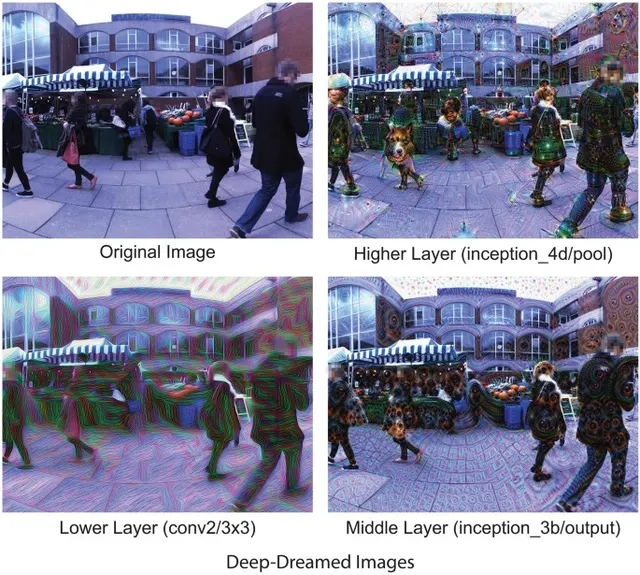
A Deep-Dream Virtual Reality Platform for Studying Altered Perceptual Phenomenology - Scientific Reports
A novel tool called the Hallucination Machine combines deep convolutional neural networks and panoramic VR to simulate visual hallucinatory experiences, mimicking the phenomenology of psychedelics without altering neurophysiology. Experiments show it induces similar visual effects but does not produce the temporal distortions typically associated with altered states.

AI Keeps Getting Better at Talking About Consciousness
Current scientific asymmetry exists between the rapid advancement of artificial intelligence and the limited understanding of consciousness. While AI models like Claude 3.0 exhibit traits associated with consciousness, they express uncertainty about their own sentience and inner experiences, highlighting the ongoing philosophical and scientific questions surrounding the nature of consciousness.
- Editor
- Not recorded yet
- Last reviewed
- Not reviewed yet
Conversation
Share your experience of it
What it was like, what helped, what you would tell someone before they try it.