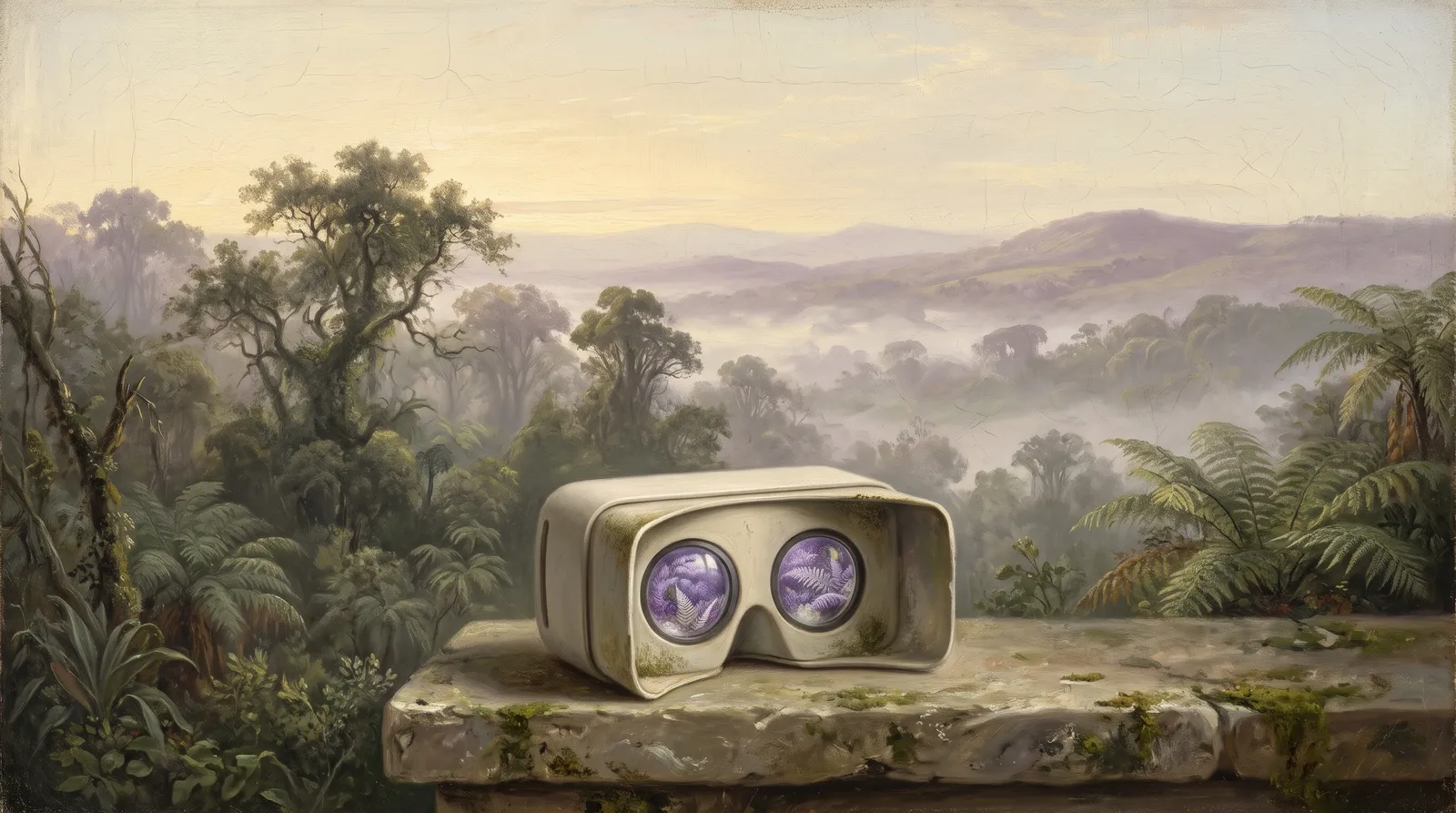
Knowledge · Article
Tripping on virtual reality: The artists trying to replicate psychedelic experiences in VR
By Rich Haridy
Virtual reality can create unique altered states but cannot fully replicate psychedelic experiences; artists explore cyberdelic media that leverage VR’s strengths while acknowledging its limits, highlighting projects like the Hallucination Machine that simulate visual hallucinations yet fall short of inducing the deeper psychological, embodied, and spiritual effects of psychedelics.
- Kind
- Article34 articles in the bank
- Published
- 2019Where it sits among everything in the Knowledge Bank, by year
- Author
Topics
Summary
About the article
Can virtual reality replicate a psychedelic experience, or does its real value lie in creating altered states unique to the medium? Rich Haridy explores this question through Jan Kounen’s Ayahuasca (Kosmik Journey), Sander Bos’s Visionarium, and conversations with artists and researchers. He finds Kounen’s recreation visually striking but ultimately superficial, arguing that depicting a ceremony is not the same as inducing its psychological, embodied, or spiritual effects. He also raises concerns about reducing an Indigenous ceremony to a consumable spectacle.
The article introduces cyberdelics as a broader exploration of technology’s potential to produce “mind-manifesting” effects rather than simply imitate drug experiences. Artist and writer Jon Weinel describes altered states as including meditation, trance, dreaming, and hallucination—not just psychedelic states—and suggests that immersive media can offer transformative experiences on its own terms.
The University of Sussex’s Hallucination Machine combines panoramic imagery, Google’s DeepDream neural network, and VR to simulate aspects of visual hallucination. Researcher Keisuke Suzuki reports similarities with some subjective effects of psilocybin, while stressing that this does not reproduce the psychedelic experience as a whole. Ego dissolution and a sense of unity remain beyond what the technology described can reliably simulate. Haridy’s central argument is that compelling cyberdelic experiences should embrace VR’s distinctive strengths and acknowledge its limits, rather than promise a shortened substitute for a drug-induced journey.
https://newatlas.com/vr/tripping-virtual-reality-ayahuasca-vr-psychedelic-experiences/
Related
More like this

Brainwave Entrainment & The Frequency-Following Response of Light & Sound
The episode explores brainwave entrainment and how light and sound stimulation can influence brainwave activity through the frequency-following response.
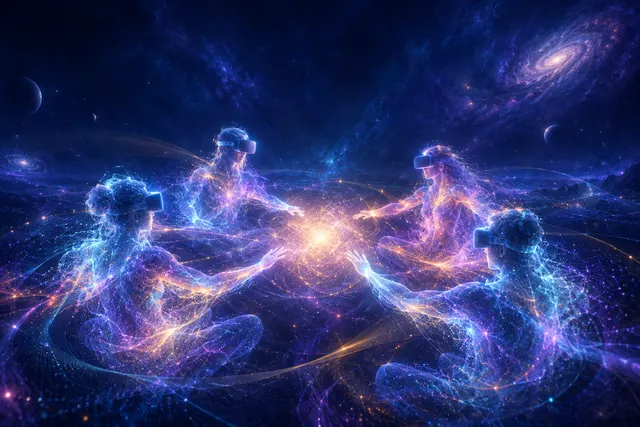
Isness: Using Multi-Person VR to Design Peak Mystical Type Experiences Comparable to Psychedelics
This open-access CHI 2020 research article evaluates Isness, a multi-person VR journey in which participants experience their bodies as collective energetic essences. In a study of 57 participants using the MEQ30, reported mystical-type experiences were comparable to those in published high-dose psilocybin and LSD studies. The paper presents VR phenomenology as a possible route to connectedness, transcendence, and ineffability within a supportive setting; this is a comparison study, not evidence that VR pharmacologically reproduces psychedelics.

Research Cyberdelics: Context engineering psychedelics for altered traits
Cyberdelics and Cyberdelic Psychotherapy can enhance therapeutic psychedelic experiences through context engineering, which restructures perception and cognition. This approach aims to optimize psychedelic-assisted therapy by utilizing virtual and augmented environments, game mechanics, and principles from positive psychology and mindfulness, potentially aiding in personal growth and mental health recovery.
- Editor
- Not recorded yet
- Last reviewed
- Not reviewed yet
Conversation
Share your experience of it
What it was like, what helped, what you would tell someone before they try it.