Explore
Knowledge
Papers, articles, books, videos and tools on technology, art and consciousness, collected and summarised.
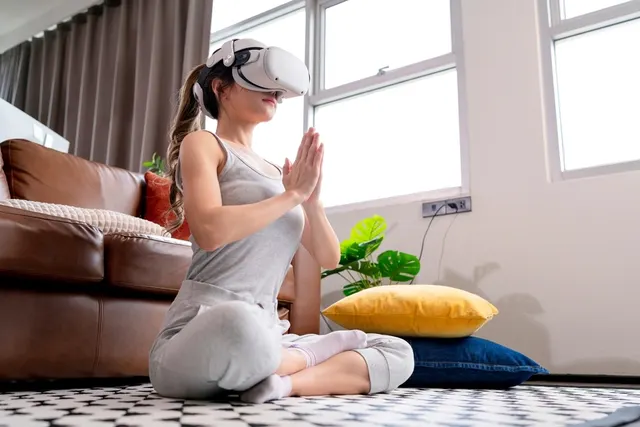
A Holistic Approach to Employee Functioning: Assessing the Impact of a Virtual-Reality Mindfulness Intervention at Work
A workplace virtual reality mindfulness intervention was studied to assess its impact on employee wellbeing, performance, and attitudes. The intervention showed a significant reduction in employee stress but did not consistently improve performance or attitudes. Recommendations for overcoming organizational barriers to enhance job performance and reduce program attrition were provided, highlighting the need for further examination of stress management strategies.
A Virtual Reality Application for Stress Reduction: Design and First Implementation of ERMES Project
The ERMES project utilizes Virtual Reality to enhance psychological well-being by offering immersive experiences aimed at stress reduction. It includes Mindfulness sessions, virtual museum exploration, and Art Therapy activities, allowing patients to engage in therapeutic practices individually or collaboratively in hospital settings.

Active VR Games Reduce Pain Sensitivity in Young, Healthy Adult
Research indicates that engaging in active virtual reality (VR) games can significantly reduce pain sensitivity in young, healthy adults. This effect is primarily attributed to distraction, as participants focus on the VR environment rather than the pain stimulus. Previous studies have shown that both passive and active VR engagement can lead to lower pain levels, but most prior research has concentrated on passive experiences with limited exposure time.
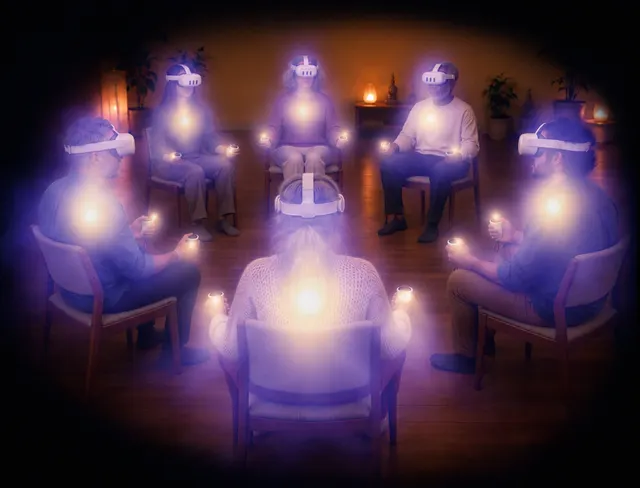
Autonomic indicators of self-transcendence: insights from the numadelic VR paradigm
HRV amplitude is identified as a physiological marker of self‑transcendent experiences during a “numadelic” VR paradigm, showing links to subjective self‑transcendence, compassion traits, and emotional improvement, though the study does not establish general clinical efficacy or long‑term effects.

Exploring Peak Experiences through Multi-Sensory Extended Reality
Research explores how Multi-Sensory Extended Reality (MSXR) can induce Peak Experiences and altered states of consciousness to improve mental health. The study uses a qualitative phenomenological approach to capture participants' experiences and perceived therapeutic benefits, aiming to enhance the role of immersive technologies in mental health interventions and contribute to counseling psychology and consciousness studies.

Technodelic Transformation: A Study on Virtual Reality for Psychological Well-Being
Research confirms the efficacy of Virtual Reality (VR) in treating mental health disorders, highlighting its potential as an embodied medicine for transformative experiences similar to psychedelics. The study investigates the effects of SoundSelf VR, focusing on its impact on psychological well-being, transformative processes, and the relationship between non-ordinary states of consciousness and mental health, using a participatory research methodology.
The Light and Dark Sides of VR
Virtual Reality (VR) has diverse applications in entertainment, education, therapy, and research, enhancing communication and wellbeing. However, it also poses risks from overuse and unethical design, potentially leading to negative effects, especially in vulnerable users. Identifying these risks and establishing safety guidelines is crucial as VR becomes more integrated into daily life.

The Psychophysiological Effects of Music and Vibroacoustic Stimulation
Vibroacoustic therapy, which combines music and low-frequency sound vibrations, was studied to compare its effects with music alone and silence. Results indicated significant reductions in blood pressure, pulse rate, and muscle oscillation frequency across all conditions. Subjective feelings of health and comfort improved more with vibroacoustics than with music alone, particularly among women who reported a broader range of changes in their health perception.
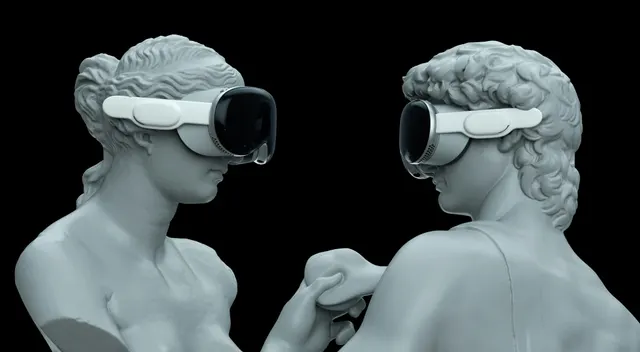
Virtual Reality and Empathy
Virtual reality (VR) has the potential to enhance empathy through immersive experiences, but empirical evidence is limited. This research topic explores how VR experiences can be designed to foster empathy, the consequences of such experiences, and the conditions under which they may lead to negative effects. It invites contributions on psychological models, design factors, measurement innovations, neuroscientific insights, practical implications, and ethical considerations related to VR as an "empathy machine."

Virtual reality: a powerful technology to provide novel insight into treatment mechanisms of addiction
Virtual reality (VR) is emerging as a significant tool in mental health research, particularly for studying addiction. It offers immersive environments that simulate real-life scenarios, allowing researchers to investigate factors like craving, psychophysiology, and cognition in addiction treatment. VR enables standardized experimental designs and personalized simulations, enhancing understanding of treatment mechanisms and potentially leading to more effective therapeutic strategies.

VR for Enhancement of Emotional Mindset in the First Lockdown of United Kingdom for the Covid-19 Pandemics
During the UK lockdown from March to May 2020, data from the Office for National Statistics revealed significant changes in people's behavior. The use of the Virtual Reality app TRIPP for meditation was found to effectively enhance psychological and emotional mindsets during this challenging period.

VR Therapy in Palliative Care: A Case Series
Virtual reality (VR) therapy offers potential benefits for reducing symptom burden in palliative care patients. This case series evaluates the feasibility and acceptability of using VR therapy in this population, addressing a gap in existing research on its application in palliative settings.