Explore
Knowledge
Papers, articles, books, videos and tools on technology, art and consciousness, collected and summarised.
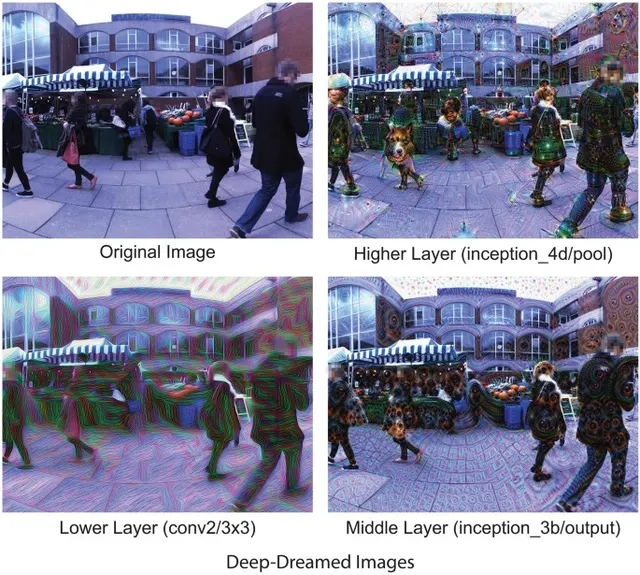
A Deep-Dream Virtual Reality Platform for Studying Altered Perceptual Phenomenology - Scientific Reports
A novel tool called the Hallucination Machine combines deep convolutional neural networks and panoramic VR to simulate visual hallucinatory experiences, mimicking the phenomenology of psychedelics without altering neurophysiology. Experiments show it induces similar visual effects but does not produce the temporal distortions typically associated with altered states.
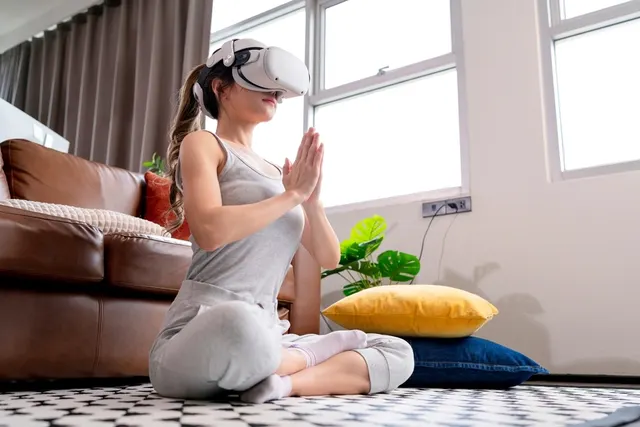
A Holistic Approach to Employee Functioning: Assessing the Impact of a Virtual-Reality Mindfulness Intervention at Work
A workplace virtual reality mindfulness intervention was studied to assess its impact on employee wellbeing, performance, and attitudes. The intervention showed a significant reduction in employee stress but did not consistently improve performance or attitudes. Recommendations for overcoming organizational barriers to enhance job performance and reduce program attrition were provided, highlighting the need for further examination of stress management strategies.

A predictive coding approach to psychedelic virtual-induced hallucinations and creative cognition in aging
Recent research explores the potential of psychedelics in enhancing cognitive flexibility and creativity, particularly through Virtual Reality (VR) simulations. This approach may help counteract cognitive decline in aging, as it optimizes the balance between expectations and sensory information, thereby supporting creative cognition and maintaining cognitive functions.
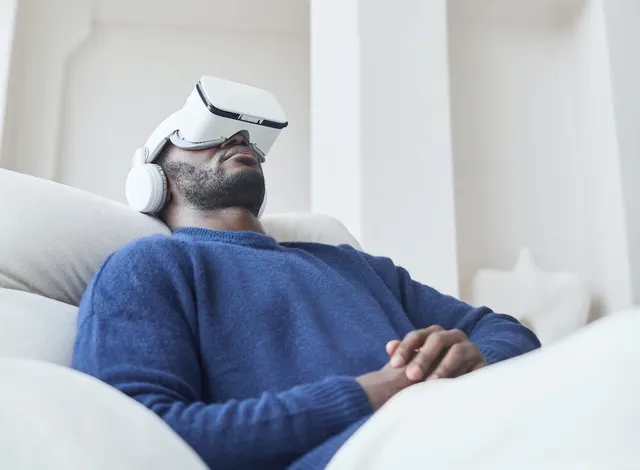
A Virtual Reality Application for Stress Reduction: Design and First Implementation of ERMES Project
The ERMES project utilizes Virtual Reality to enhance psychological well-being by offering immersive experiences aimed at stress reduction. It includes Mindfulness sessions, virtual museum exploration, and Art Therapy activities, allowing patients to engage in therapeutic practices individually or collaboratively in hospital settings.

Active VR Games Reduce Pain Sensitivity in Young, Healthy Adult
Research indicates that engaging in active virtual reality (VR) games can significantly reduce pain sensitivity in young, healthy adults. This effect is primarily attributed to distraction, as participants focus on the VR environment rather than the pain stimulus. Previous studies have shown that both passive and active VR engagement can lead to lower pain levels, but most prior research has concentrated on passive experiences with limited exposure time.

Art as therapy in VR: A scoping review
This scoping review examines the use of virtual reality in therapeutic art interventions, highlighting its potential for enhancing artistic expression, self-improvement, and motivation in psychotherapy and neurorehabilitation. While virtual reality offers unique benefits, such as controlled environments and appeal to digital natives, challenges like digital literacy, technical limitations, and inclusivity must be addressed by practitioners and developers for effective implementation.
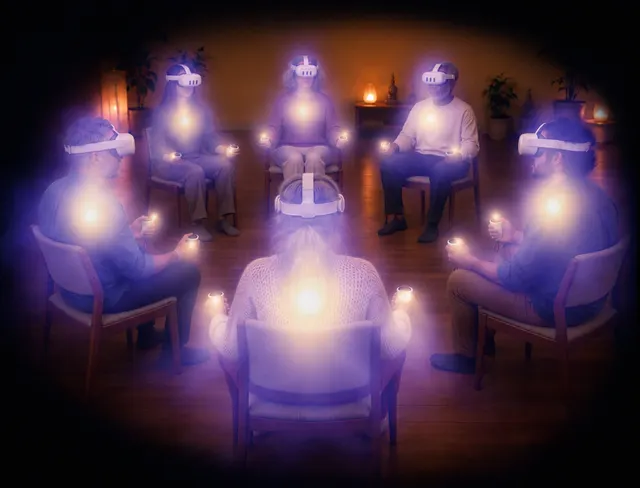
Autonomic indicators of self-transcendence: insights from the numadelic VR paradigm
HRV amplitude is identified as a physiological marker of self‑transcendent experiences during a “numadelic” VR paradigm, showing links to subjective self‑transcendence, compassion traits, and emotional improvement, though the study does not establish general clinical efficacy or long‑term effects.
Clinical application of VR in patients with cardiovascular disease: state of the art
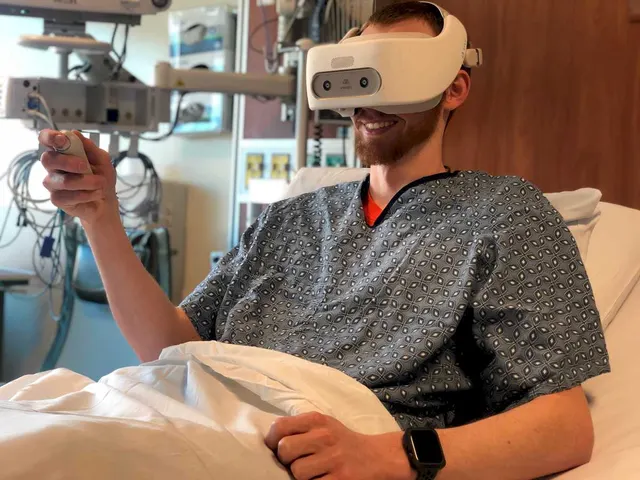
Cardiovascular disease remains a significant cause of morbidity and mortality, with patients experiencing various psychological symptoms, including anxiety and depression, which can impact recovery. Virtual reality (VR) technology has shown promise in improving psychological outcomes for patients with atherosclerotic cardiovascular disease (ASCVD) by providing immersive experiences that can alleviate distress and enhance recovery processes.
Context Engineering Hybrid Spaces for Perceptual Augmentation
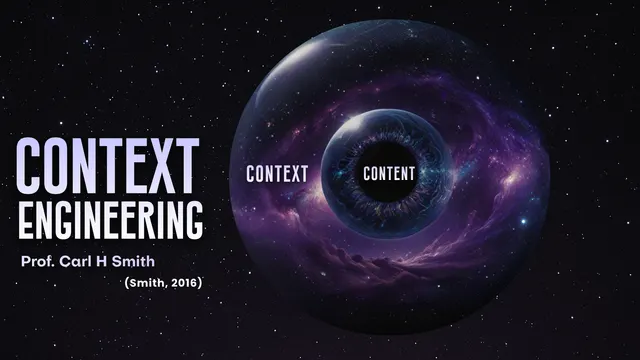
Emerging spatial technologies are reshaping perception, challenging the traditional Cartesian split between subject and object. This paper explores how context engineering serves as an intermedial practice for perceptual augmentation, allowing real-time control over senses and influencing the construction of reality and consciousness.

Designing Mind(set) and Setting for Profound Emotional Experiences in Virtual Reality
Virtual reality can facilitate profound emotional experiences, such as awe, by considering the influence of "set and setting," which includes mindset and the environment. A design refinement process revealed insights on user experience and behavioral measures related to awe, contributing to understanding how these factors enhance emotional experiences in VR.
Embodied Telepresent Connection (ETC): Exploring Virtual Social Touch Through Pseudohaptics
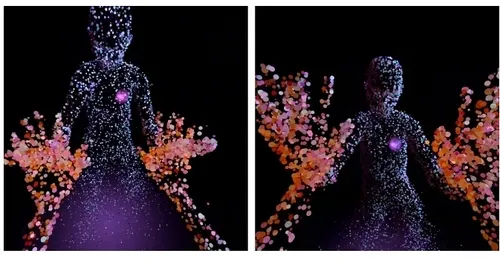
The research explores the use of pseudo-haptics to create an embodied illusion of social touch in virtual reality through a prototype called ETC. It involves interaction patterns that simulate touch using visuals, sounds, and biosignal representation. Initial observations from events and workshops indicate that this approach can foster a subtle yet intimate experience of virtual social connection.
Emotional Beasts
Advancements in VR and physiological sensing enable immersive communication through lifelike avatars. The proposed solution involves integrating bio-signal sensors to detect users' emotional states and creating expressive avatars, termed Emotional Beasts. This approach aims to enhance self-expression and emotional connection in VR, moving beyond surface-level experiences to foster deeper human interactions.

Exploring Peak Experiences through Multi-Sensory Extended Reality
Research explores how Multi-Sensory Extended Reality (MSXR) can induce Peak Experiences and altered states of consciousness to improve mental health. The study uses a qualitative phenomenological approach to capture participants' experiences and perceived therapeutic benefits, aiming to enhance the role of immersive technologies in mental health interventions and contribute to counseling psychology and consciousness studies.

Eye movements in virtual environments
Recent advancements in virtual reality (VR) with embedded eye-tracking offer new opportunities for research, but they also present unique challenges for data collection and analysis. This paper discusses best practices for validating 3D gaze-tracking in VR, highlighting a pilot study that indicates accuracy may vary with stimulus distance and cautions against relying solely on vergence for estimating gaze depth.

Flicker light stimulation enhances the emotional response to music: a comparison study to the effects of psychedelics
Flicker light stimulation (FLS) enhances emotional responses to music, similar to the effects of psychedelics. In a study with twenty participants, FLS significantly increased reported emotions, particularly "Joyful Activation," and intensity of FLS correlated with higher emotional arousal. These findings suggest further exploration of FLS as a method for inducing altered states of consciousness and its interaction with music-evoked emotions.
Immersive virtual reality or computerised mindfulness meditation for improving mood?
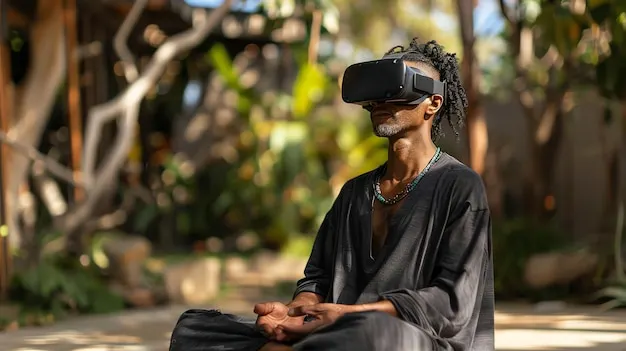
Mindfulness interventions effectively improve mood and reduce stress. This study compares the efficacy of immersive virtual reality-based mindfulness with computerised mindfulness meditation in a pilot trial, also examining potential simulator sickness effects on user engagement.

Sipping the virtual elixir: An autoethnographic close reading of Ayahuasca Kosmik Journey, a self-transcendent virtual experience
Self-transcendent experiences in ancient psychedelic ceremonies, like ayahuasca, can be explored through virtual reality (VR) as a legal alternative. An autoethnographic analysis of Ayahuasca Kosmik Journey reveals insights into the design and experience of cyberdelic interactions, highlighting themes of agency, embodiment, and self-transcendence. The study emphasizes the role of spatiality and sensory engagement in evoking profound emotional responses, while also addressing the limitations of immersive technology in replicating these experiences.
The Light and Dark Sides of VR
Virtual Reality (VR) has diverse applications in entertainment, education, therapy, and research, enhancing communication and wellbeing. However, it also poses risks from overuse and unethical design, potentially leading to negative effects, especially in vulnerable users. Identifying these risks and establishing safety guidelines is crucial as VR becomes more integrated into daily life.
The Reality of VR
The fundamental question surrounding virtual reality (VR) is its level of realism, which influences its perception as either advanced computer technology or a distinct media experience. This understanding is essential for utilizing VR in scientific learning and therapeutic applications.
Virtual Reality and Empathy
Virtual reality (VR) has the potential to enhance empathy through immersive experiences, but empirical evidence is limited. This research topic explores how VR experiences can be designed to foster empathy, the consequences of such experiences, and the conditions under which they may lead to negative effects. It invites contributions on psychological models, design factors, measurement innovations, neuroscientific insights, practical implications, and ethical considerations related to VR as an "empathy machine."

VR for Enhancement of Emotional Mindset in the First Lockdown of United Kingdom for the Covid-19 Pandemics
During the UK lockdown from March to May 2020, data from the Office for National Statistics revealed significant changes in people's behavior. The use of the Virtual Reality app TRIPP for meditation was found to effectively enhance psychological and emotional mindsets during this challenging period.

VR Therapy in Palliative Care: A Case Series
Virtual reality (VR) therapy offers potential benefits for reducing symptom burden in palliative care patients. This case series evaluates the feasibility and acceptability of using VR therapy in this population, addressing a gap in existing research on its application in palliative settings.
VR-based relaxation for enhancement of perioperative well-being, mood and quality of life - Scientific Reports
Virtual Reality (VR) is emerging as a cost-effective digital therapeutic tool for stress reduction, improving symptoms of anxiety and depression, and enhancing psychological well-being, particularly in cancer patients. VR interventions create immersive environments that distract users from their immediate surroundings, potentially reducing perioperative stress and improving quality of life and patient satisfaction during surgery.